
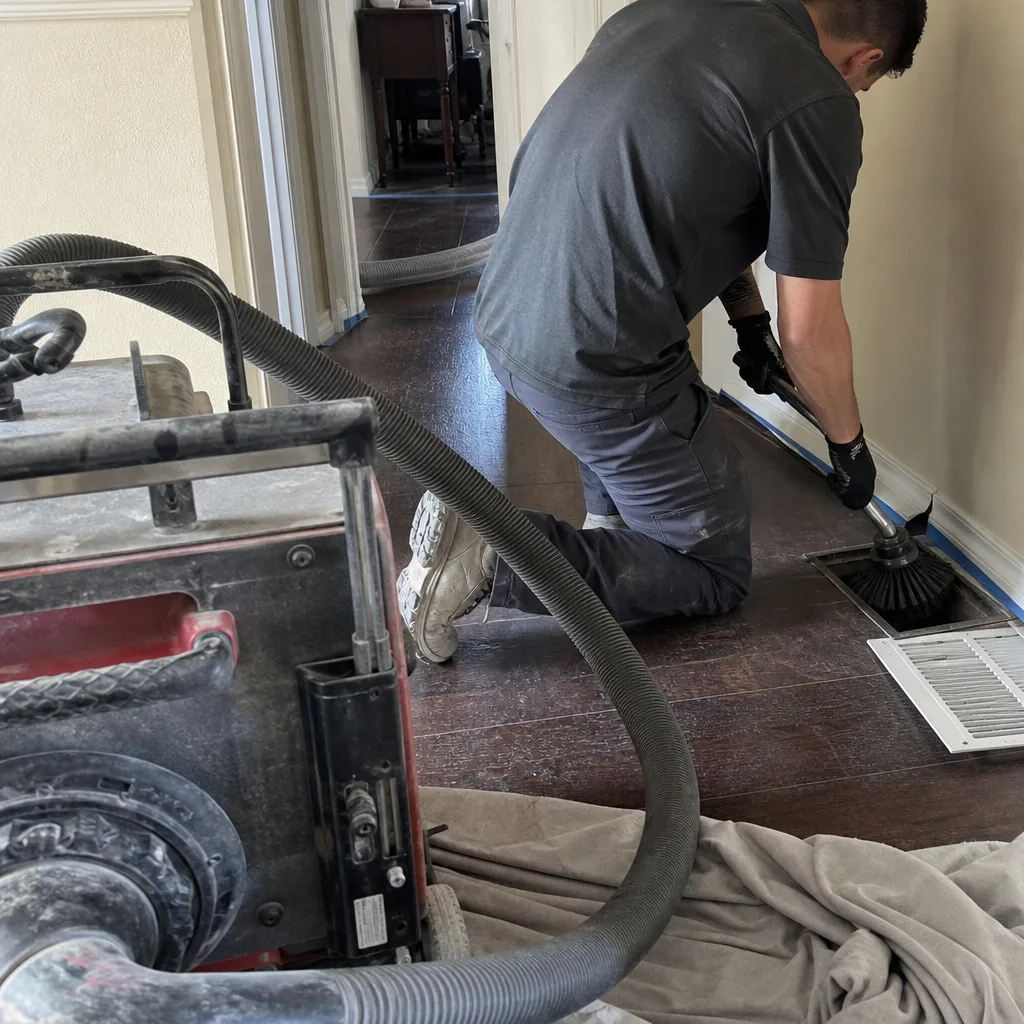
Last updated November 4, 2026
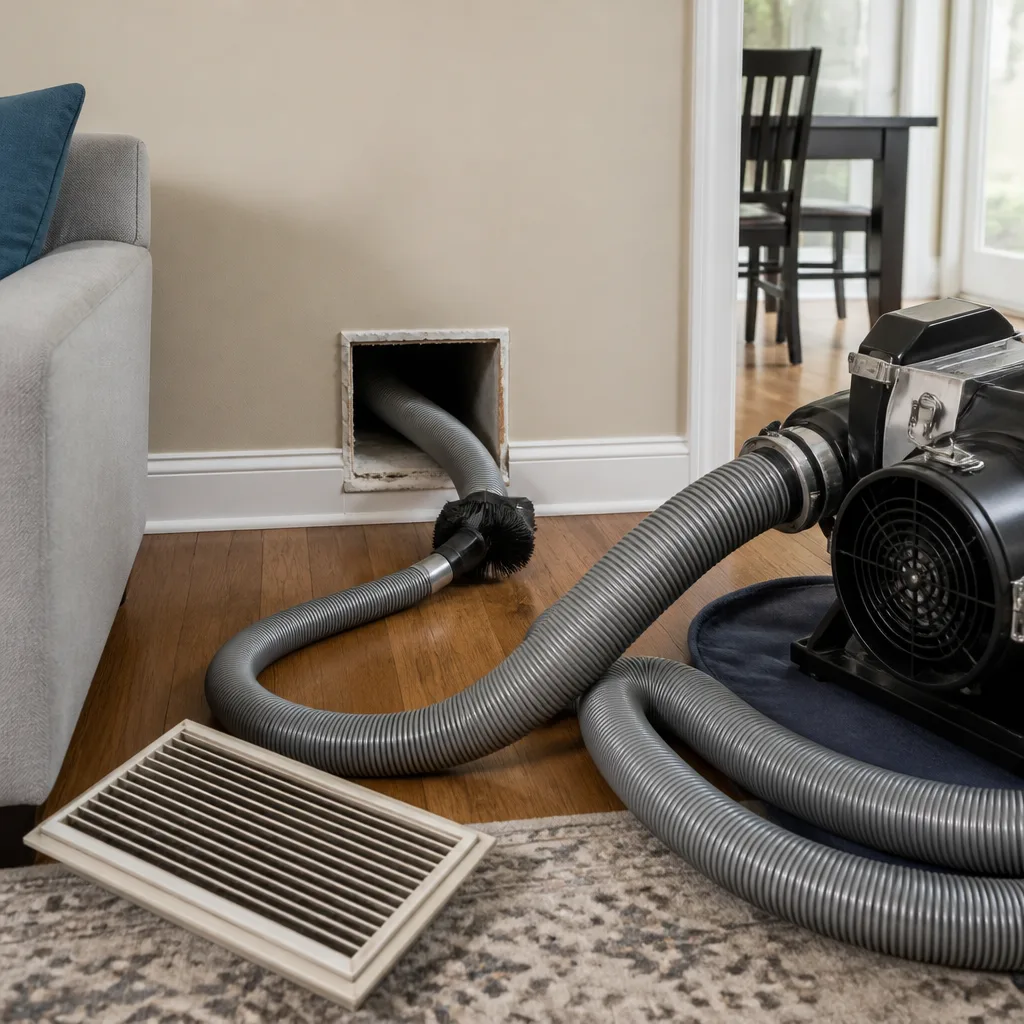 Whole-home duct cleaning
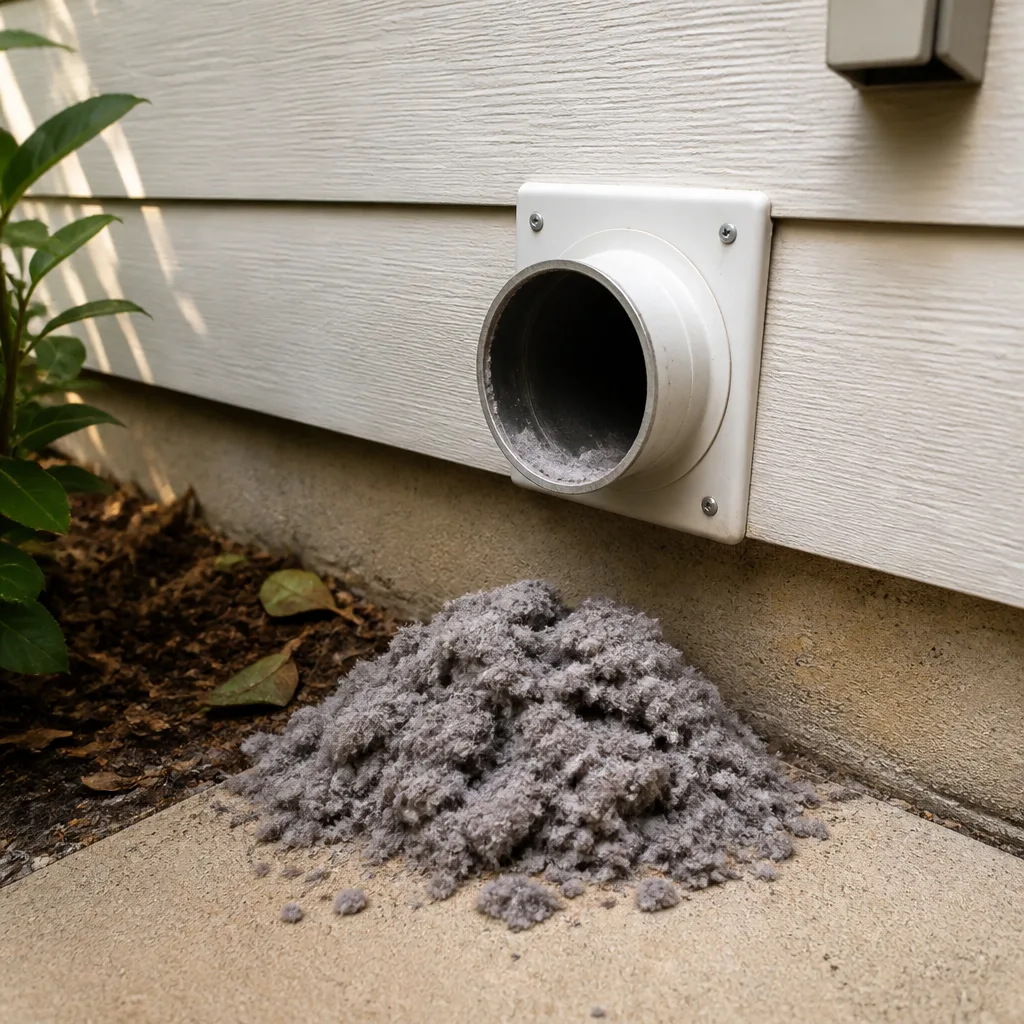 Dryer vent cleaning
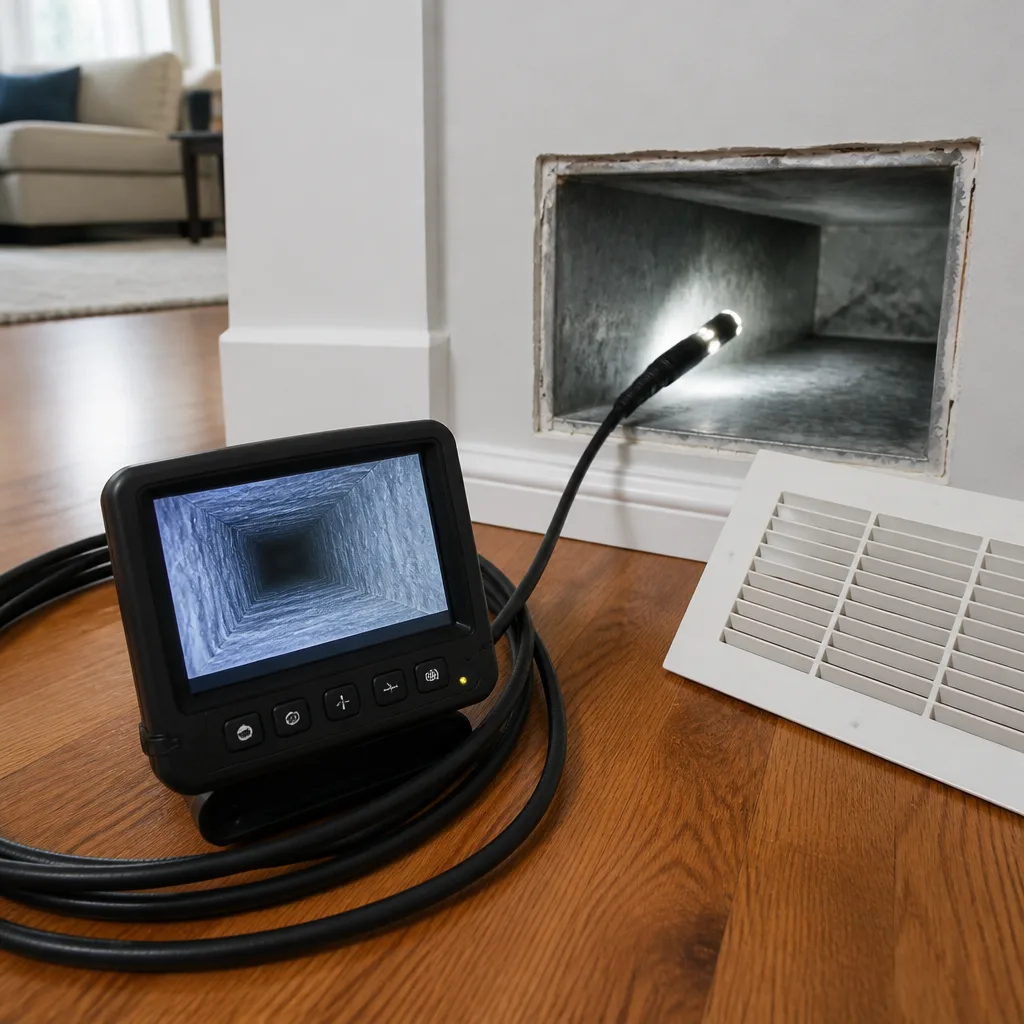 Camera inspection
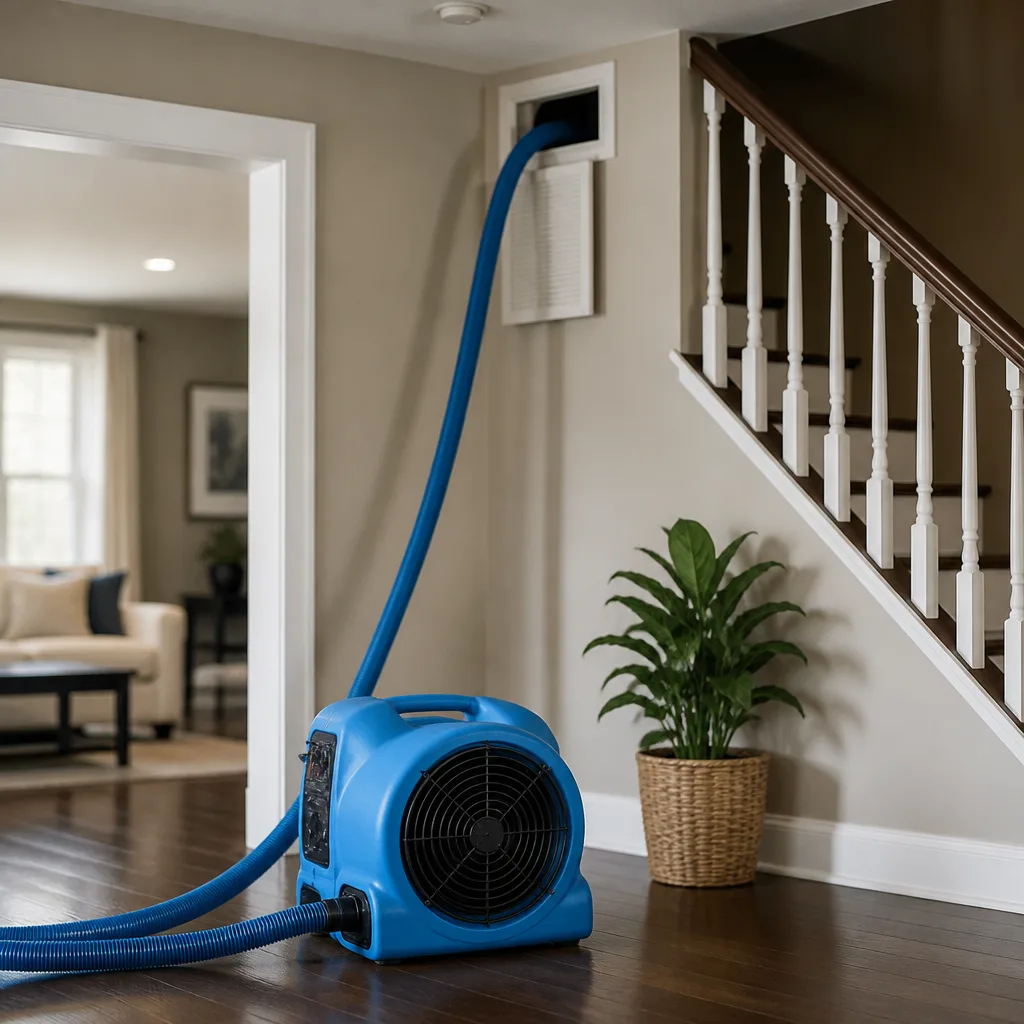 Sanitizing & deodorizing
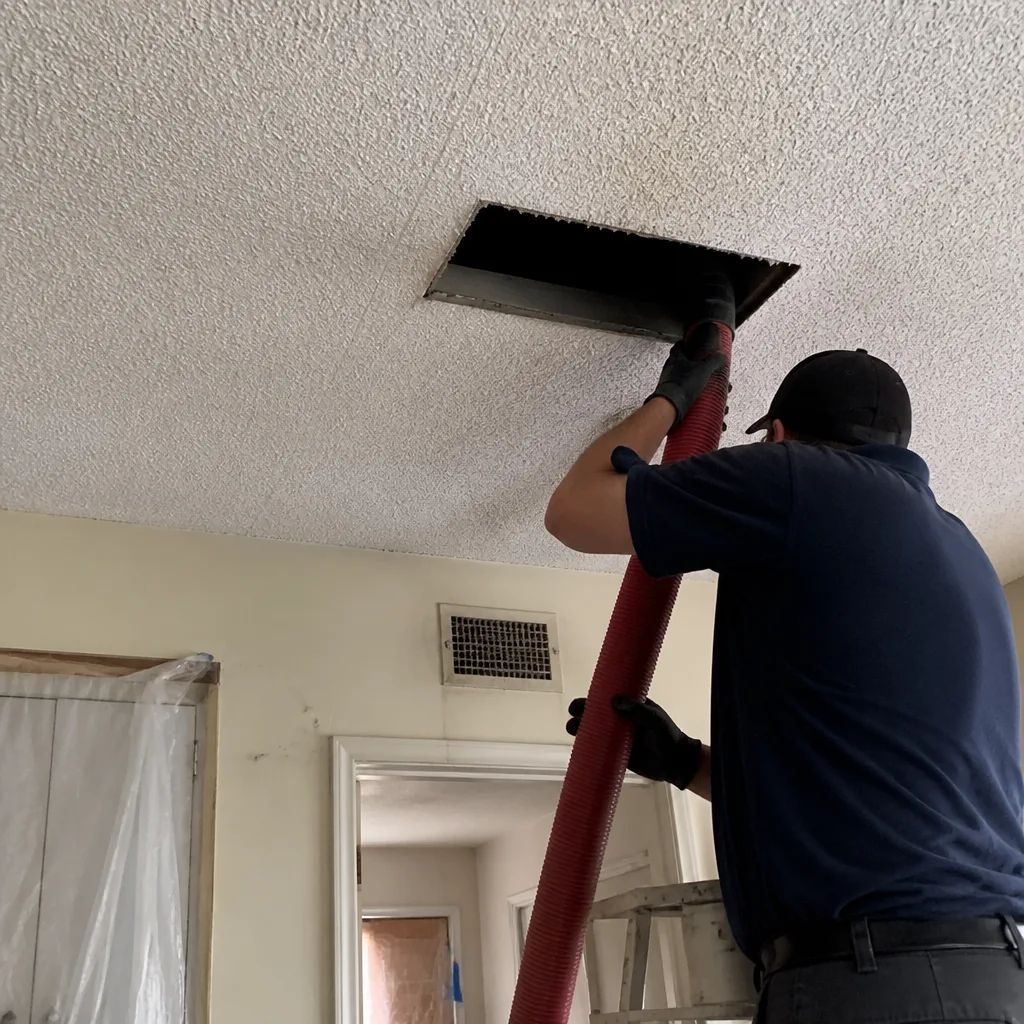
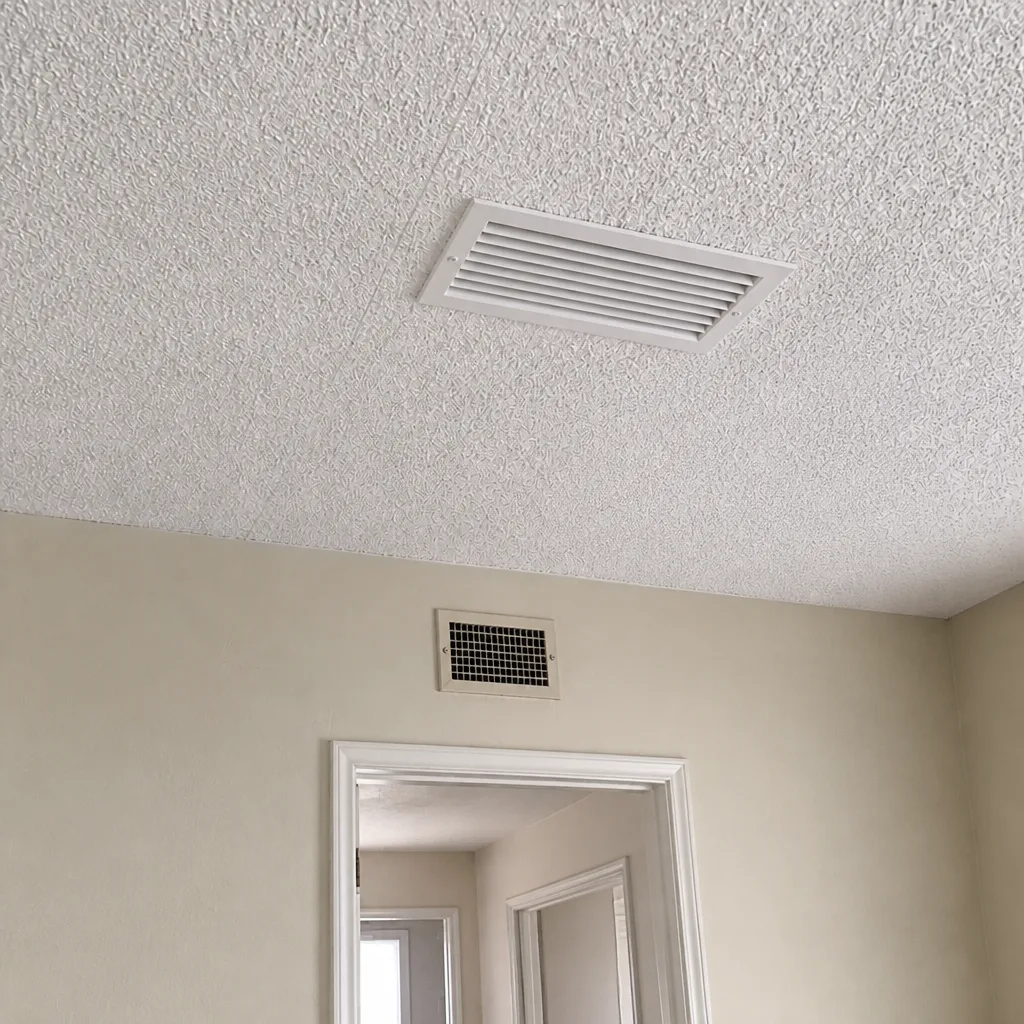
Whole-system duct and dryer vent check with before-and-after photos - you see exactly what came out of your vents
That "$99 whole-house special" is a bait ad - the real number appears once they are in your hallway, or the "clean" is a shop-vac at the register. We photograph the inside of your ducts before and after instead.
Air Duct Cleaning Emergency Preparedness Guide for Simi Valley Homes
Most homeowners think of duct cleaning as spring maintenance, something you schedule when the dust bunnies get ambitious. But in Simi Valley, the real reason to think about your ductwork has nothing to do with ordinary house dust. It has to do with what happens when a wildfire pushes smoke into the valley and your HVAC system keeps running. The fine ash that settles inside your ducts doesn’t leave when the sky clears. It sits there, and every time your system cycles, a portion of it gets stirred back into the air your family breathes. This guide explains what actually happens inside your ductwork during a smoke event, why standard cleaning methods don’t always address it, and how to prepare before the next fire season arrives.
Quick Answer
Air duct cleaning after a wildfire smoke event in Simi Valley should be scheduled once outdoor air quality has stabilized and your HVAC filters have been upgraded or replaced. Standard rotary-brush duct cleaning removes settled debris, but fine smoke particulate (PM2.5) requires a more thorough approach that includes source removal and, in heavy contamination cases, abatement-grade equipment. Waiting weeks or months after a smoke event allows fine ash to re-suspend into living spaces every time the system runs.
Styles & brands we work with
- Whole-home duct cleaning
- Dryer vent cleaning
- Camera inspection
- Sanitizing & deodorizing
Table of Contents
- What Happens Inside a Duct System During a Wildfire Smoke Event
- PM10 vs PM2.5: Why Fine Ash Behaves Differently in Ductwork
- Pre-Fire Preparation Steps for Your HVAC System
- Post-Event Cleaning Protocol: Timing and What to Expect
- Documentation for Insurance Purposes
- How Much Does Smoke-Related Duct Cleaning Cost in Simi Valley?
- Common Mistakes to Avoid
What Happens Inside a Duct System During a Wildfire Smoke Event
During the Woolsey Fire, air quality monitoring stations near Simi Valley recorded PM2.5 levels above 300 µg/m³ for multiple days. To put that in perspective, the EPA considers anything above 35 µg/m³ unhealthy for sensitive groups over a 24-hour period. Homes in Simi Valley had their HVAC systems cycling thousands of cubic feet of that air through ductwork, often continuously, as residents tried to keep indoor temperatures manageable while the smoke settled over the valley.
Here’s what most people don’t realize: your standard HVAC filter, even a decent MERV 8 or MERV 11 unit, is designed to capture larger particles. Fine ash from wildfire smoke measures 2.5 microns or smaller, which means a substantial portion passes straight through the filter media. Once that particulate enters the duct system, it behaves differently depending on where it lands.
Inside a typical residential duct system, air velocity varies significantly. In the main trunk lines, air moves fast enough to keep most particles suspended. But in the branch runs, return drops, and low-velocity corners near the plenum, air slows dramatically. That’s where fine particulate settles. Over days and weeks of smoke exposure, a layer of fine ash accumulates in these low-velocity sections. It doesn’t blow back out on its own, but it also doesn’t stay perfectly still. When the blower cycles on, the initial surge of air can disturb the top layer of settled particulate, re-suspending it into the air stream.
This is why you might notice a faint smoke odor in your home weeks after the outdoor air has cleared, or why your allergies flare up every time the AC kicks on. The system itself has become a reservoir for the event you thought was over.
As a team that has worked on Simi Valley duct systems after major fire events, we’ve seen what this looks like from the inside. The film left behind isn’t like ordinary household dust. It’s finer, stickier, and infiltrates deeper into insulation-lined ducts and plenum surfaces. Standard duct cleaning methods that work well for routine dust and pet hair don’t always fully address this type of contamination.
PM10 vs PM2.5: Why Fine Ash Behaves Differently in Ductwork
To understand why post-wildfire duct cleaning requires a different approach, it helps to know the difference between PM10 and PM2.5, and what each does inside a duct system.
PM10 (coarse particulate, 2.5 to 10 microns): This is the larger fraction of smoke particulate. It includes visible ash flakes, charred organic material, and fine dust. Inside a duct system, PM10 behaves predictably. Most of it gets caught by standard HVAC filters before it ever enters the ductwork. The fraction that does get through tends to settle quickly in the first few feet of duct after the filter housing, usually in accessible trunk lines. Standard rotary-brush duct cleaning, the kind performed with air duct cleaning equipment like Nikro systems, removes this material effectively.
PM2.5 (fine particulate, 2.5 microns and smaller): This is the fraction that causes the most trouble. PM2.5 particles are small enough to bypass most residential filters, remain suspended in air for long periods, and travel deep into the farthest reaches of a duct system. When they finally settle, they do so in low-velocity zones: return drops, branch run takeoffs, plenum corners, and the interior surfaces of flex duct. These particles are also more likely to bond with moisture films inside ducts, creating a residue that mechanical brushing alone may not fully remove.
Here’s the practical implication for Simi Valley homeowners: after a significant smoke event, the most contaminated sections of your ductwork are likely the ones a routine cleaning never touches. A credible contractor adjusts their approach for fine-ash infiltration, spending more time on return-side ducting, using higher-suction extraction, and in severe cases, deploying abatement-grade equipment designed for contaminated environments.
We carry Abatement Technologies equipment for exactly this reason. It’s remediation-grade machinery, the kind used when the concern isn’t just dust but actual contamination from mold, heavy debris, or post-fire particulate. For smoke infiltration jobs, having that capability means the difference between a surface cleaning and actual source removal.
Pre-Fire Preparation Steps for Your HVAC System
If you live in Simi Valley, fire season isn’t a hypothetical. Preparing your HVAC system before smoke arrives can significantly reduce the amount of particulate that infiltrates your ductwork in the first place. Here are the steps we recommend to homeowners who want to get ahead of the problem.
- Upgrade your filter before fire season, not during it. A MERV 13 filter, or better, captures a much higher percentage of PM2.5 than the standard pleated filters most homes run. If your system can accommodate a MERV 13 or higher media filter, install one before the smoke season starts. Don’t wait until the sky turns orange, because by then you’re already cycling contaminated air.
- Run the fan continuously during heavy smoke, but only if your filter is upgraded. Running the blower on “fan only” mode keeps air moving through the upgraded filter, which removes suspended particulate from the indoor air. If you’re still running a low-efficiency filter, you’re better off limiting system runtime, because you’re just circulating unfiltered smoky air through the house.
- Know your fresh-air intake situation. Many newer Simi Valley homes have fresh-air intakes that pull outdoor air into the return side of the system. During heavy smoke, close or block these intakes. If you leave them open, you’re actively pumping wildfire smoke into your ductwork, bypassing whatever filter efficiency you’ve achieved.
- Consider positive-pressure strategies after the smoke clears. Once outdoor air quality returns to acceptable levels, running a slight positive pressure in the home helps push residual particulate out through small gaps and keeps outdoor particulates from being drawn back in. This is easiest to achieve with a whole-home system that has a controlled fresh-air intake, or by running exhaust fans in kitchens and bathrooms while keeping windows on the leeward side slightly open.
These steps don’t eliminate the need for post-event cleaning, but they do reduce the volume of ash that ends up inside your ductwork, which reduces the scope and cost of the cleaning when it happens.
Post-Event Cleaning Protocol: Timing and What to Expect
One of the most common questions we get from Simi Valley homeowners after a smoke event is about timing: when is the right moment to clean the ducts? The answer matters more than most people expect.
Wait until outdoor air has stabilized. Cleaning your ducts while smoke is still in the area is counterproductive. The cleaning process itself requires running a high-powered vacuum system, and if outdoor air quality is still poor, you’ll be drawing contaminated air through the home while you work. Wait until air quality readings for Simi Valley have returned to normal or near-normal ranges for at least a few days. That usually means waiting for the AQI to drop below 100 and hold there.
Replace filters first. Before any duct cleaning happens, swap out the filter that ran through the smoke event. You don’t want a saturated filter restricting airflow while the cleaning equipment is operating.
Expect a different process than routine cleaning. A smoke-infiltration cleaning involves more than the standard rotary-brush pass. Here’s what a credible contractor should do differently:
- Start with a system inspection, including return-side ducting and plenum surfaces, to identify where fine particulate settled most heavily.
- Spend additional time on return drops and low-velocity sections where PM2.5 tends to accumulate.
- Use negative-air or high-suction extraction equipment that captures particulate rather than redistributing it through the home.
- Clean the blower assembly, evaporator coil, and plenum interior, not just the branch runs.
- In cases of heavy contamination, use abatement-grade HEPA filtration equipment to prevent cross-contamination during the cleaning process itself.
We use Nikro and Rotobrush systems for standard duct cleaning, but for post-smoke jobs we’re more likely to bring Abatement Technologies equipment into the mix, because the standard for this type of work is different. You’re not just removing dust. You’re removing a contaminant that has health implications for the people living in the home.
If your ductwork was damaged by heat or heavy debris during a fire event, air duct cleaning alone won’t address it. Damaged or disconnected sections need to be repaired before cleaning can be effective, otherwise you’ll be pulling smoky, contaminated air from crawlspaces or attics through gaps in the duct runs. That’s why we offer dryer vent cleaning and air duct repair alongside cleaning, handled by the same crew in the same visit.
Documentation for Insurance Purposes
If you’re considering filing an insurance claim for smoke damage, documentation matters. Insurance adjusters want evidence that the damage is real, that it happened during the covered event, and that the remediation work was necessary. Here’s how to build a defensible record.
Before the event: If you haven’t had your ducts cleaned recently, schedule a basic inspection and cleaning before fire season. This establishes a baseline, and the invoice or report from that service is evidence that your system was in reasonable condition before the fire. Even if you don’t do a full cleaning, a documented inspection with photos gives you something to compare against later.
During the event: Keep a simple log. Note the dates when outdoor air quality was poor in Simi Valley, whether your system was running, and what filter you had installed. If you upgraded your filter mid-event, note when. Screenshot AQI readings from public sources. This isn’t just useful for insurance, it helps a contractor understand what the system has been through.
After the event: Before cleaning, take photos of the return grilles, filter, and any visible interior duct surfaces if you can access them. A good contractor will also document what they find: the condition of the filter, the amount and type of debris removed, and any damage to duct components. After cleaning, request before-and-after photos of the duct interiors. This documentation serves two purposes: it proves the work was done, and it gives you a record that the system was properly remediated if questions come up later.
Keep in mind that not all homeowner policies cover wildfire smoke infiltration in ductwork. Some policies treat it as a maintenance issue rather than a covered loss. The documentation above puts you in a stronger position either way, because it demonstrates that the contamination was event-driven and not the result of deferred maintenance.
How Much Does Smoke-Related Duct Cleaning Cost in Simi Valley?
Pricing for post-smoke duct cleaning in Simi Valley typically runs higher than routine cleaning, because the scope of work is different. Here are the factors that influence cost and the ranges you can generally expect.
- Routine whole-home duct cleaning: Most Simi Valley homes fall in the $450 to $800 range for a standard cleaning, depending on the number of returns, the number of stories, and system accessibility.
- Smoke-infiltration cleaning: Expect to add $150 to $400 to the standard cleaning price. This covers the additional time spent on return-side ducting, plenum cleaning, and the use of higher-grade extraction equipment.
- Abatement-grade cleaning: If the contamination is severe, pricing moves into the $1,200 to $2,500 range, depending on the size of the system and whether HEPA equipment and containment protocols are required.
- Duct repair: If sections of ductwork were damaged and need repair or replacement, that’s priced separately based on the scope of the repair.
These are estimated ranges for the Simi Valley market, not firm quotes. Every home is different, and the final price for your specific system depends on what a technician finds during the inspection. The written estimate you receive before work starts is what sets the actual price.
If you’re comparing quotes, ask specifically what’s included. A cheap post-smoke cleaning that skips the return side of the system is not a good deal, it’s an incomplete job. The contamination that matters most after a wildfire is exactly what routine cleaning often misses.
Call Duct Cleaning Simi Valley at (855) 353-2270 for a free estimate. We answer 24/7. Fast dispatch from 7am to 7pm, Sunday through Friday.
Common Mistakes to Avoid
After a significant smoke event in Simi Valley, homeowners tend to make a few predictable mistakes. Most of them stem from the assumption that duct cleaning is duct cleaning, and that one approach works for every situation. Here’s what we see go wrong most often.
- Cleaning too early. Scheduling duct cleaning while outdoor air quality is still poor means the system gets re-contaminated as soon as the job is done. Wait for AQI readings in Simi Valley to stabilize for a few days before you clean.
- Skipping the return side. The return ducts are where the majority of fine particulate enters the system, and they’re also the hardest part to clean properly. If a contractor only focuses on supply runs, you’re leaving the most contaminated sections untouched.
- Replacing the filter and calling it done. A new filter doesn’t remove what’s already settled inside the ductwork. It just prevents more from entering. The system still needs cleaning.
- Using compressed-air methods instead of source removal. Blowing compressed air through ducts without proper negative-air extraction just re-distributes particulate into your living space and into other parts of the system. Source removal with rotary-brush and vacuum extraction is the standard we use for a reason.
- Ignoring duct damage. After a fire event, especially if debris or heat affected the home, duct sections can be damaged, disconnected, or collapsed. Cleaning a damaged system is wasted money. Repairs need to happen first.
- Not documenting anything. If you’re going to file an insurance claim, you’ll need evidence. No photos, no inspection report, no contractor documentation means your claim is much harder to support.
See the difference
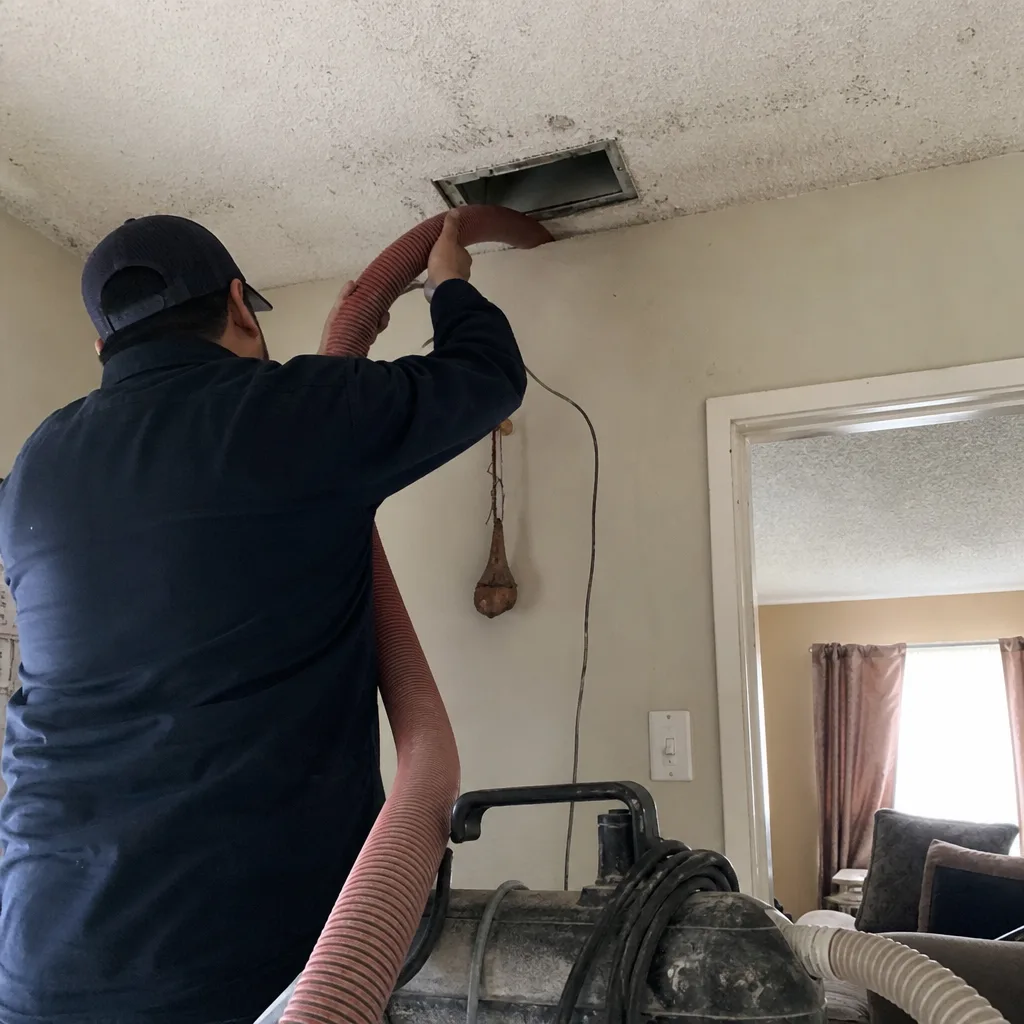 Before
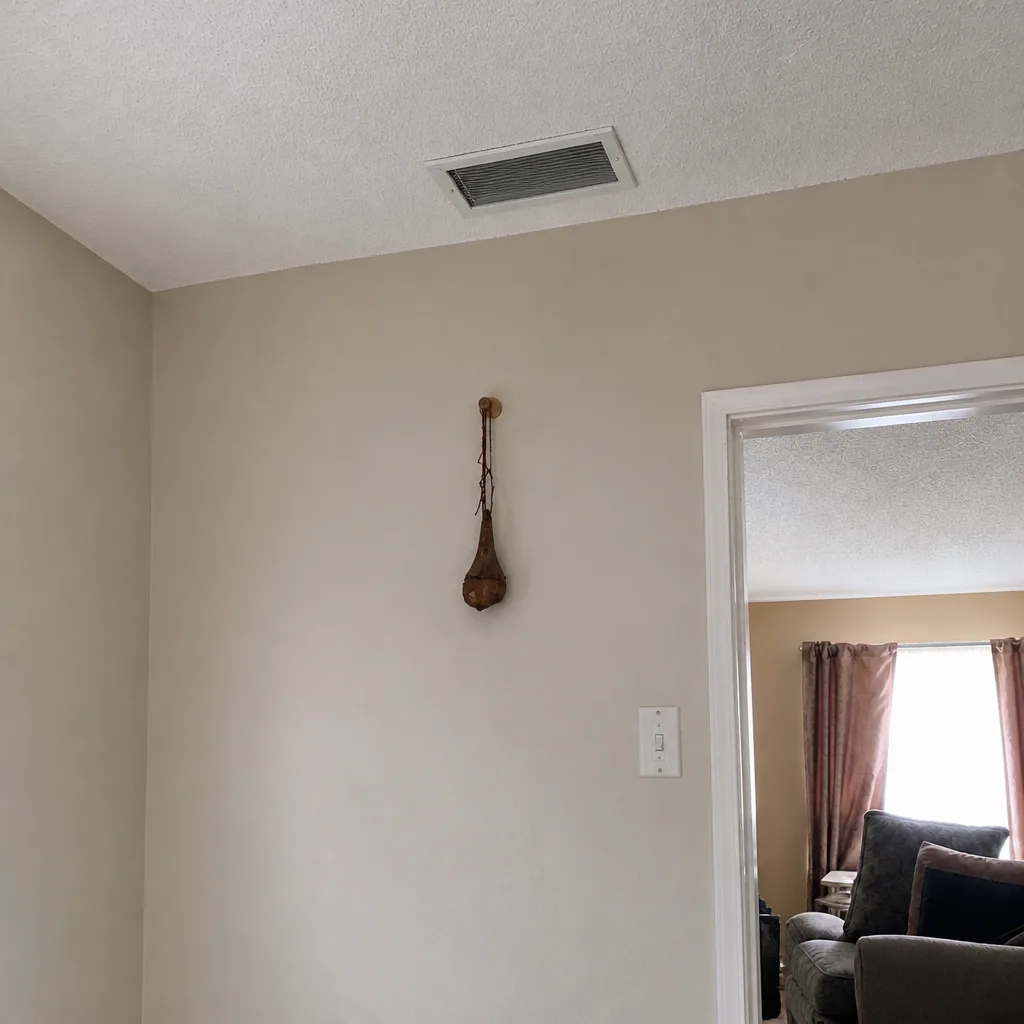 After
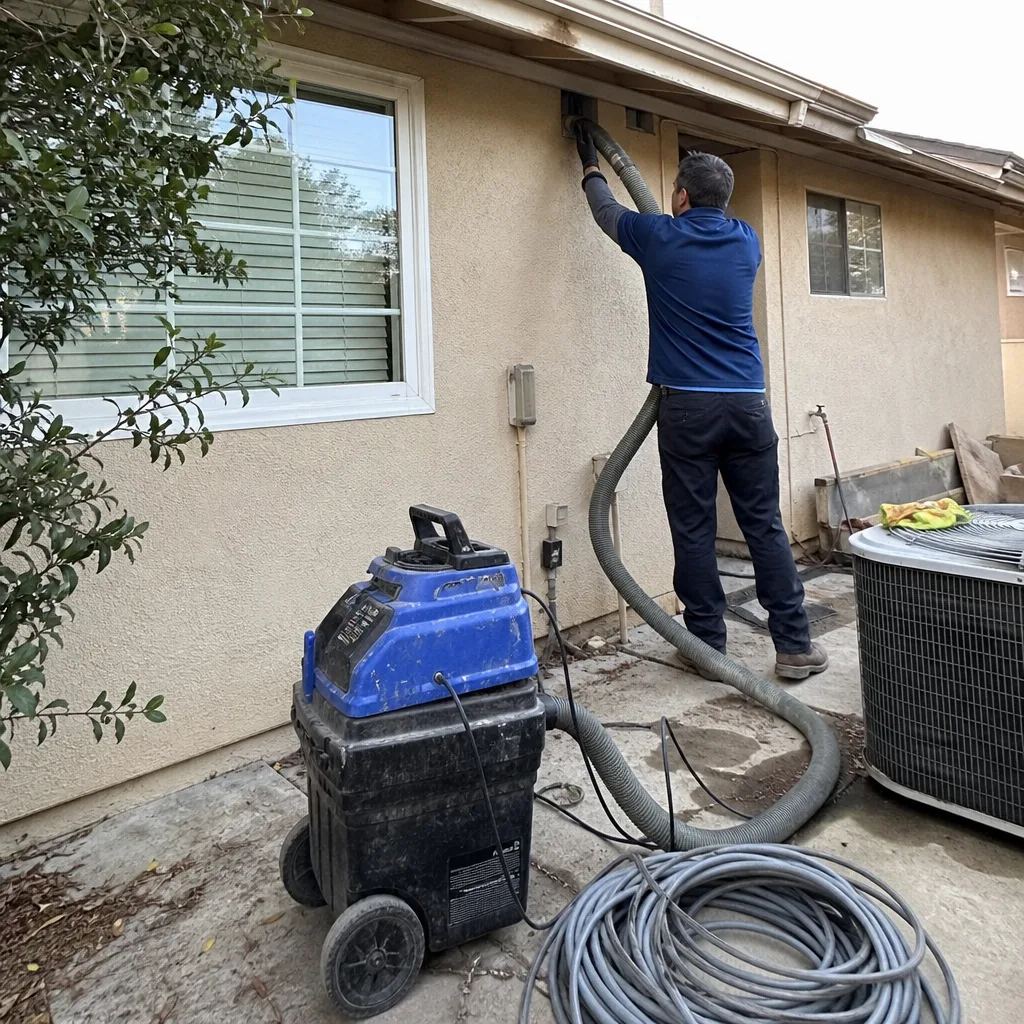 Before
 After
 Before
 After
When to Call a Professional
Some situations genuinely require professional attention, and smoke infiltration is one of them. Call a professional if your home was in a Simi Valley wildfire smoke zone for more than a few days, if you can smell smoke when the HVAC system runs, if family members are experiencing unexplained respiratory irritation that improves when the system is off, or if you’re preparing an insurance claim and need documented evidence of cleaning and remediation. If any part of your duct system is visibly damaged after a fire event, don’t run the system at all until it’s been inspected. Simi Valley homeowners can call Duct Cleaning Simi Valley at (855) 353-2270 for a free estimate. We answer 24/7. Fast dispatch from 7am to 7pm, Sunday through Friday.
Frequently Asked Questions
Wait until outdoor air quality in Simi Valley has returned to normal for at least a few days, usually when the AQI holds below 100. Cleaning while smoke is still present just re-contaminates the system. After the air clears, schedule the cleaning as soon as practical, because fine ash left in the ducts will continue re-suspending into your living space every time the system runs. Call (855) 353-2270 for a free estimate.
Yes, and this is one of the biggest misconceptions we encounter. Standard HVAC filters, even decent ones, allow a large fraction of PM2.5 particulate to pass through. Once inside, that fine ash settles in low-velocity sections of the duct system, like return drops and branch run takeoffs. It doesn’t leave on its own, and it gets stirred back into the air whenever the blower cycles.
Usually not. Standard cleaning removes the larger debris and surface dust, but fine smoke particulate requires more time on the return side, more thorough plenum cleaning, and in severe cases, abatement-grade extraction equipment. Ask any contractor you’re considering whether they adjust their process for smoke infiltration specifically.
Most post-smoke cleanings in Simi Valley fall in the $600 to $1,200 range for a typical single-family home, with abatement-grade work running higher if contamination is severe. The final price depends on system size, accessibility, and what the inspection finds. Call (855) 353-2270 for a written estimate, it’s free.
Coverage varies by policy. Some policies treat smoke infiltration in ductwork as a covered loss, others classify it as maintenance. Either way, documentation matters. Baseline inspection records, AQI screenshots, and before-and-after photos from the cleaning all strengthen your position if you file a claim.
We don’t recommend it. Residential vacuums and shop equipment lack the suction power and filtration needed to remove fine particulate from ductwork. DIY attempts usually redistribute the contaminant rather than remove it, and you won’t have the documentation you’d need for an insurance claim. For smoke-related contamination, professional source removal is the right tool for the job.
The Bottom Line
Simi Valley’s proximity to wildfire corridors means duct cleaning isn’t just a maintenance task here, it’s an emergency preparedness measure. The fine ash that infiltrates your system during a smoke event stays in your ductwork long after the sky clears, re-suspending into your air every time the system runs. Prepare in advance by upgrading filters and knowing your fresh-air intake situation. After an event, wait for air quality to stabilize, then call a contractor who understands the difference between smoke-infiltration cleaning and routine maintenance. Document everything, especially if insurance is involved. If your home has been through a recent smoke event in Simi Valley, call (855) 353-2270 for a free estimate. We answer 24/7, and fast dispatch is available from 7am to 7pm, Sunday through Friday.
Written by the team at Duct Cleaning Simi Valley, serving Simi Valley since 2013.