
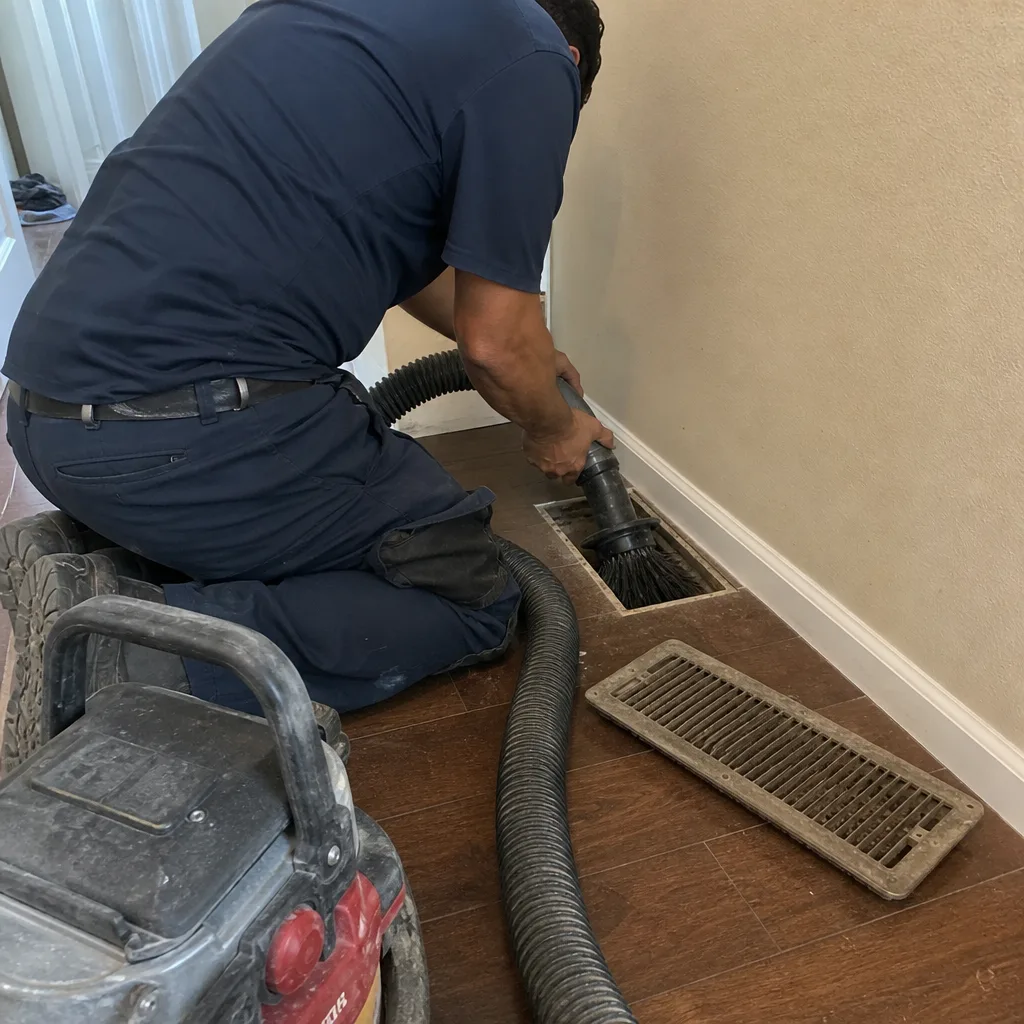
Last updated November 4, 2026
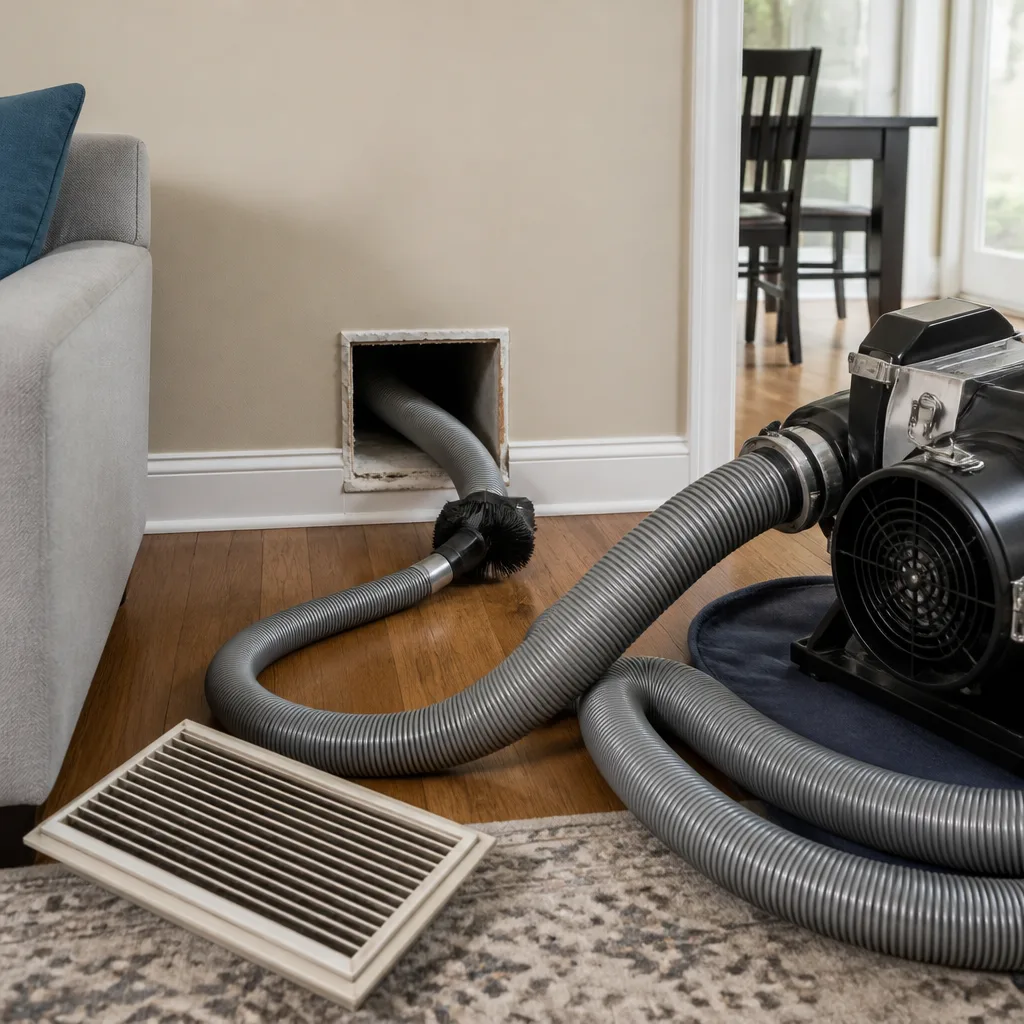 Whole-home duct cleaning
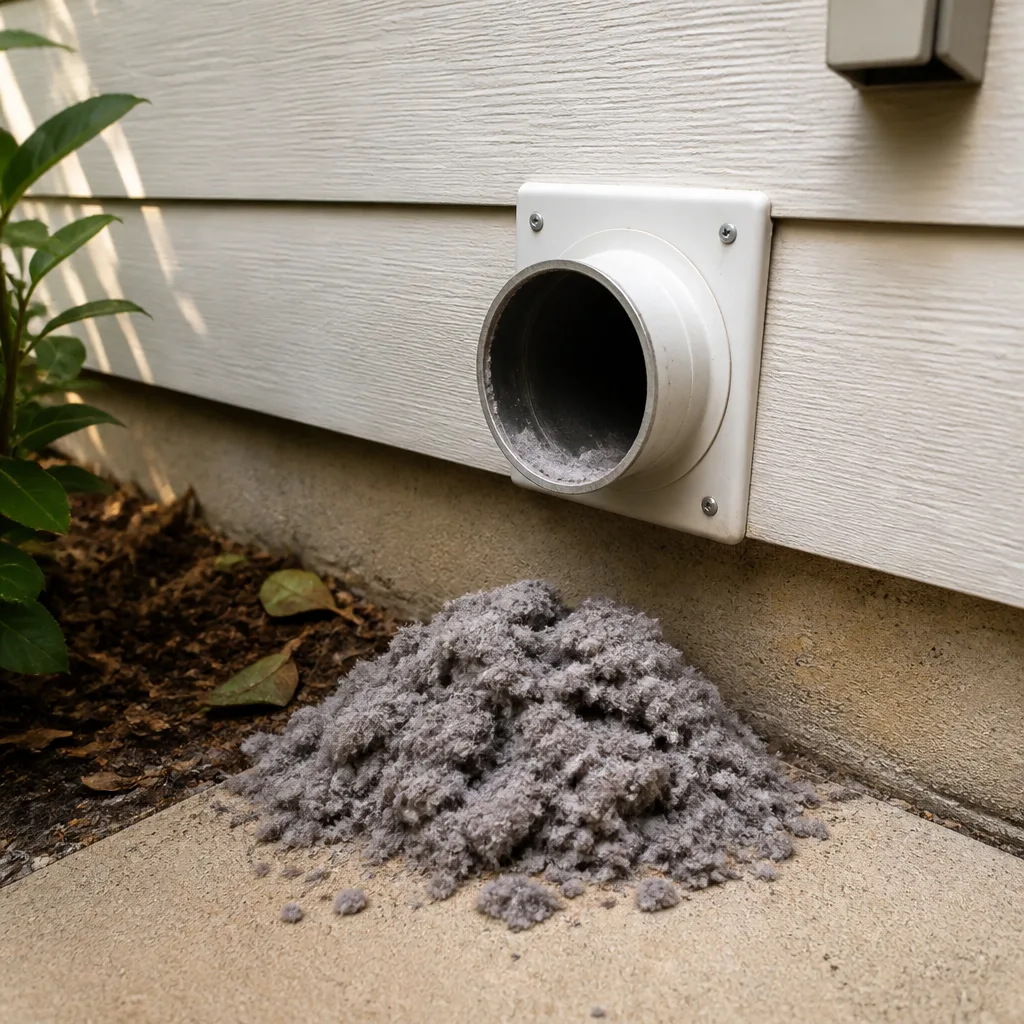 Dryer vent cleaning
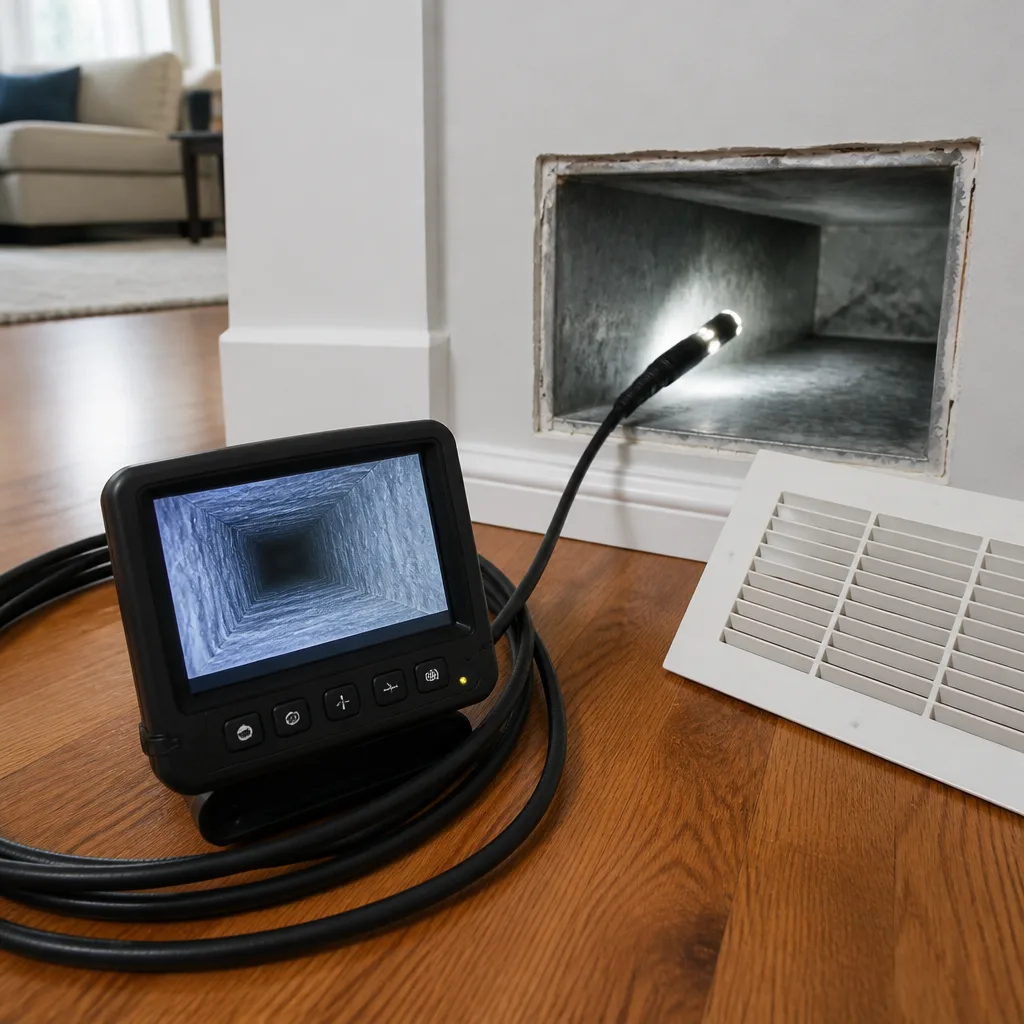 Camera inspection
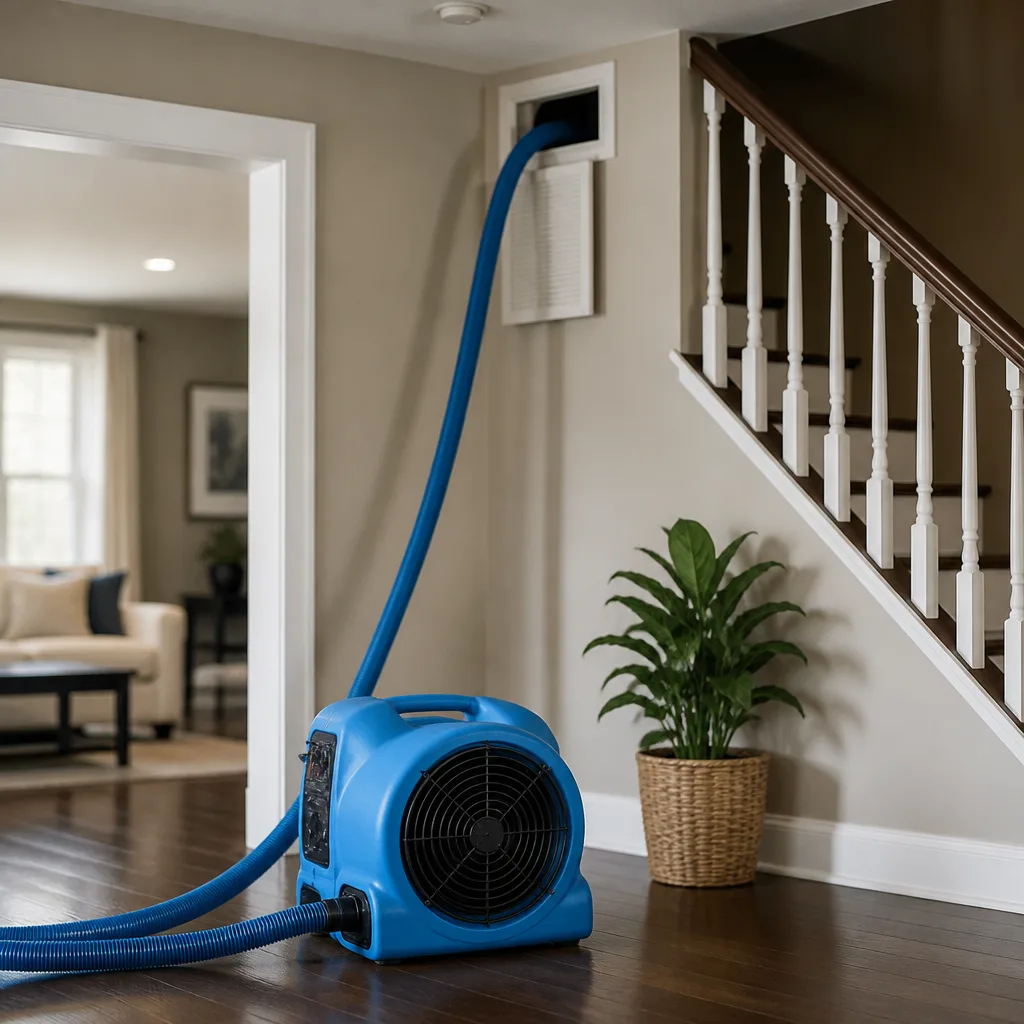 Sanitizing & deodorizing
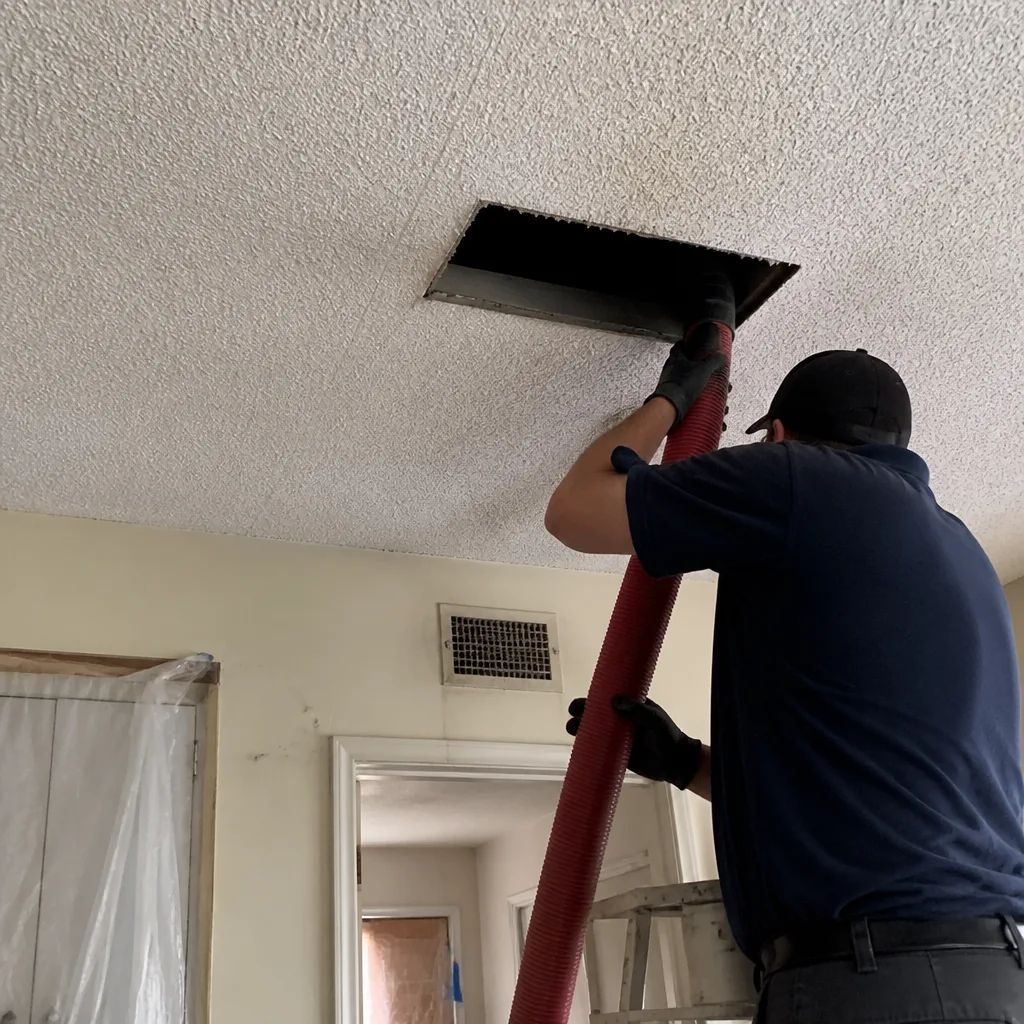
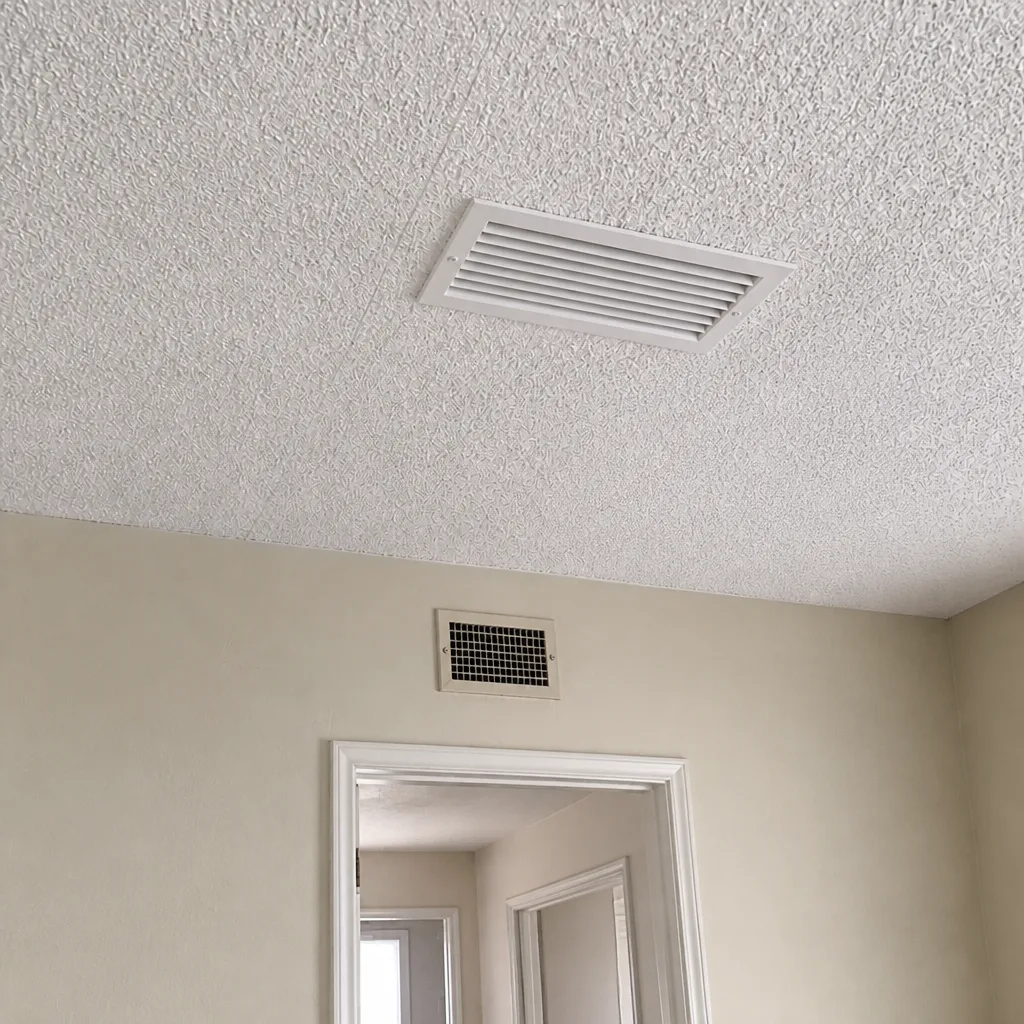
Whole-system duct and dryer vent check with before-and-after photos - you see exactly what came out of your vents
That "$99 whole-house special" is a bait ad - the real number appears once they are in your hallway, or the "clean" is a shop-vac at the register. We photograph the inside of your ducts before and after instead.
Air Duct Cleaning Warning Signs: A Simi Valley Homeowner’s Reference Guide
Dust on a register grille is actually one of the least reliable indicators of a dirty duct system, and Simi Valley homeowners who judge their ducts by what they can see at the vent are often looking at the wrong end of the problem. Surface dust reflects what’s happening at the point of delivery, not deep in the main trunk lines or at the coil face where debris accumulation does the real damage to efficiency and air quality. By the time a homeowner notices visible dust buildup on the grille, the system has usually been circulating compromised air for months. This guide covers what actually signals a duct problem in a Simi Valley home: energy consumption patterns, HVAC performance shifts, air handler conditions, and post-renovation contamination events that most residential reference material skips over entirely.
Quick Answer
The most reliable signs that air ducts need cleaning in Simi Valley are a 15 to 20 percent increase in cooling runtime with no change in thermostat settings, uneven room temperatures that persist after basic troubleshooting, musty or burning-dust odors that return after filter replacement, and visible debris or discoloration at the return side of the system rather than the supply registers. These indicators point to airflow restriction, moisture intrusion, or contamination accumulation inside the ductwork itself. If you’re seeing two or more of these signs, the system needs a professional assessment with actual duct inspection equipment, not just a visual glance at the grilles.
Styles & brands we work with
- Whole-home duct cleaning
- Dryer vent cleaning
- Camera inspection
- Sanitizing & deodorizing
Table of Contents
- Energy Consumption as an Early Warning Signal
- Uneven Room Temperatures: Duct Problems vs. Equipment Issues
- Odor Patterns That Point to Specific Duct Problems
- Visible Indicators Beyond the Dusty Grille
- Post-Renovation Warning Signs
- Moisture, Condensation, and Mold Indicators
- Common Mistakes to Avoid
- When to Call a Professional
- Frequently Asked Questions
Energy Consumption as an Early Warning Signal
The single most underappreciated duct-cleaning warning sign in Simi Valley homes shows up on the electric bill, not at the vent. When a duct system accumulates debris on the coil face, blower wheel, or interior trunk surfaces, the HVAC unit has to work harder to move the same volume of conditioned air through the house. That extra work translates directly into longer runtimes, and in the Simi Valley summer, when the system is already cycling frequently, a restricted duct network can push monthly cooling costs up noticeably without any change in thermostat settings.
A practical way to monitor this: track your cooling runtime during a stable weather week. If the outdoor temperature holds steady and your thermostat stays at the same setpoint, but the system is running 15 to 20 percent longer than it did during a comparable week last month or last year, airflow restriction is the usual suspect. The cause is often a coil face coated with a layer of dust and pet dander that reduces heat transfer, forcing the compressor to run longer to reach the same indoor temperature. In our experience with Duct Cleaning Simi Valley service calls, a surprisingly high percentage of “my AC is getting old” complaints turn out to be a dirty coil and restricted return path rather than an aging compressor.
What a 15-20 Percent Runtime Increase Typically Indicates
- Return-side restriction: A clogged or undersized return path forces the blower to work against higher static pressure, reducing airflow across the coil and slowing heat exchange.
- Supply trunk debris accumulation: Years of dust, hair, and construction debris settle in the main trunk lines, narrowing the effective duct diameter and increasing resistance.
- Coil face fouling: A dirty evaporator coil insulates the refrigerant from the air stream, cutting cooling capacity and extending runtime.
- Blower wheel buildup: Dust accumulation on the blower wheel changes its aerodynamic profile, reducing the volume of air it can move per rotation.
Uneven Room Temperatures: Duct Problems vs. Equipment Issues
Uneven room temperatures in a Simi Valley home can stem from several causes, and sorting out whether the ducts are responsible requires understanding the difference between airflow problems and equipment problems. A zoning system that isn’t functioning, a failing damper motor, or an improperly sized AC unit can all create temperature differentials between rooms. But when the equipment checks out and the zoning system is working as designed, restricted ductwork is frequently the overlooked variable.
Here’s a step-by-step diagnostic sequence we walk homeowners through to distinguish duct-related temperature imbalance from other causes:
- Check the filters first. A heavily loaded filter at the return grille restricts airflow to the entire system, but the effect is often most noticeable in the rooms farthest from the air handler. Replace it if it’s visibly dirty.
- Verify supply dampers are open. Many Simi Valley homes have manual dampers at the supply plenum or in individual branch lines. If a room suddenly runs warm, a damper may have been closed or shifted.
- Feel the airflow at each register. Compare the force of air coming from a comfortable room’s register to the one in the problem room. A noticeable difference in velocity with no damper restriction points to branch-line blockage or a disconnected duct run.
- Check the return path. A room with a closed door and no return grille or transfer grille will always struggle because the supply air has nowhere to go. This is a design issue, not a cleaning issue, but it’s worth ruling out.
- Inspect for flex duct collapse. In attics and crawlspaces, flexible duct can get crushed by stored items, pinched under framing, or disconnected at the boot. This is a visible, physical problem that air duct cleaning alone won’t fix, which is why we offer air duct repair alongside cleaning.
Odor Patterns That Point to Specific Duct Problems
Odors coming from the HVAC system are one of the clearest warning signs that something is wrong inside the ductwork, but the source of the smell matters. Different odor profiles indicate different underlying problems, and treating them all as “dirty ducts” leads to wasted effort and a problem that comes back.
Musty or Earthy Odors
A persistent musty smell that returns after the system has been running for a few minutes usually indicates moisture inside the ductwork or at the coil pan. In Simi Valley’s climate, the most common source is condensation that forms during humid summer nights and doesn’t fully evaporate, especially in duct runs that pass through unconditioned attic space. That moisture creates an environment where mold and bacteria can grow on duct surfaces and insulation. This is not a routine dust issue, and it shouldn’t be treated like one. If moisture or microbial growth is present, the source of the water must be addressed along with the cleaning. When contamination is the concern, we use Abatement Technologies equipment designed for jobs that go beyond routine dust buildup.
Burning Dust Odor
When a heating system fires up for the first time after sitting unused, a brief burning-dust smell is normal and typically fades within a few hours. The smell comes from dust that settled on the heat exchanger or electric heating elements burning off. What’s not normal is a burning-dust smell that continues every time the system cycles, or one that appears during air conditioning season. Ongoing burning-dust odor during heating season suggests a significant volume of dust inside the air handler or ducts that gets redistributed onto hot surfaces. During cooling season, a burning or hot smell points to an electrical issue or an overheating blower motor, and that needs a technician immediately.
Chemical or Plastic Odors
A chemical smell, especially a sharp or vinyl-like odor, can indicate deteriorating flex duct liner or off-gassing from duct sealants that were improperly applied. Some older flex duct products degrade over time, releasing volatile compounds into the air stream. This is a duct material problem, not a cleanliness problem, and the resolution is repair or replacement of the affected duct runs. Our technicians can identify this on inspection and repair the damaged sections on the spot rather than just documenting it.
Visible Indicators Beyond the Dusty Grille
The grille is the last place debris stops on its way into your living space, which means a clean-looking grille tells you almost nothing about the condition of the ductwork behind it. The more informative visual signals are found at other points in the system, and the most telling ones are the ones most homeowners never look at.
Debris at the Base of Supply Registers
When the HVAC system pushes air through a dirty duct, it carries fine particulate with it. Some of that particulate settles on the wall or floor around the supply register, forming a gray or brown film that keeps coming back after cleaning. This is different from normal household dust that settles evenly. Register-adjacent debris is usually finer and darker, and it accumulates in a pattern that follows the air discharge direction. If you wipe the area clean and it’s visibly soiled again within a week, the ducts are feeding the problem.
Discoloration Around Return Grilles
The return side of the system is where air is pulled in, and over time, dust and particulate that are drawn toward the return grille get deposited on the wall or ceiling surface around it. A gray or brown halo around the return grille that doesn’t wipe away with normal cleaning indicates a high particulate load in the air being pulled through the system. Since all of that air eventually passes across the coil and through the blower, what’s collecting at the return is also collecting inside the air handler.
Visible Flex Duct Collapse
If you have access to your attic or crawlspace and can visually inspect the flex duct runs, look for sections that appear flattened, kinked, or sagging. Collapsed flex duct is a warning sign that the system is not delivering designed airflow, and in serious cases it can separate at the connection points entirely, dumping conditioned air into the attic. This is a repair issue, not a cleaning issue, and we handle it as part of our air duct repair service. A collapsed duct in a Simi Valley attic means your cooling dollars are being spent on the attic, not the living space.
Post-Renovation Warning Signs
A home renovation in Simi Valley is one of the highest-load events a duct system can face, and most homeowners don’t schedule a post-renovation duct cleaning even when the work involved drywall, flooring, or framing. Construction particulate is not like normal household dust. Drywall dust is fine enough to pass through standard HVAC filters, heavy enough to settle deep in the duct system, and abrasive enough to accelerate blower motor wear. Sawdust and flooring debris are larger and can accumulate in low points in the trunk lines, creating permanent restriction.
The standard advice during any renovation is to seal off supply and return registers or run the HVAC system only when necessary. But even with precautions, a significant amount of particulate gets into the ductwork, especially during drywall sanding. If you’ve recently completed a renovation and you’re noticing any of the following, the duct system took on more than it should have:
- Fine white dust settling on surfaces within hours of cleaning, weeks after the renovation ended
- Reduced airflow from supply registers compared to pre-renovation performance
- A drywall-dust odor when the system first starts, similar to the smell of a construction site
- Visible dust accumulation on the blower wheel when you look through the access panel
- Higher cooling runtimes during the first summer after the renovation
A post-renovation duct cleaning is not a luxury add-on. It’s the point at which the system either gets reset to clean condition or carries the construction load for years, slowly degrading efficiency and air quality. Equipment matters here: we use Rotobrush and Nikro rotary-brush-and-vacuum systems that physically remove debris rather than just blowing it loose. Compressed-air-only approaches can redistribute construction dust deeper into the system or into the living space, which defeats the purpose.
Moisture, Condensation, and Mold Indicators
Simi Valley doesn’t have the persistent humidity of a coastal or southern climate, but the seasonal swings still create condensation conditions inside duct systems. Warm attic air meeting a cold duct surface produces moisture on the insulation, and summer nights when the temperature drops while indoor humidity remains elevated can create condensation at the coil and in the drain pan. When that moisture persists, it supports microbial growth on organic debris inside the ducts, and the result is an odor and air-quality problem that keeps returning.
Indicators that moisture has become a persistent issue include water stains on the ceiling around supply diffusers, visible condensation on the outside of duct insulation in the attic, rust on the blower housing or coil cabinet, and a musty odor that intensifies when the system runs. A one-time musty smell after a rain event may be explained by outside air intrusion. A musty smell that’s present every time the system cycles, regardless of weather, points to a moisture source inside the system.
Mold remediation is a specific, regulated process, and it’s different from routine duct cleaning. If microbial growth is confirmed or suspected, the right approach starts with identifying and eliminating the moisture source, then cleaning with equipment suited for contaminated environments. Our Abatement Technologies toolkit is designed for exactly these jobs, and we approach them with the caution they deserve. Duct cleaning alone, without addressing the moisture problem, is a temporary cosmetic fix.
Common Mistakes to Avoid
- Using the dusty grille as your only indicator. A clean grille tells you nothing about the condition of the trunk lines, coil face, or return plenum. The most significant debris accumulation is usually invisible from the living space.
- Assuming a new filter means clean ducts. A high-MERV filter does a better job trapping incoming particulate, but it doesn’t remove what’s already inside the ducts. It also increases static pressure, which can make airflow restriction symptoms worse on an already-loaded system.
- Treating all odors as the same problem. Musty, burning-dust, and chemical odors have different causes and different solutions. Applying a generic cleaning to a moisture problem or a deteriorating liner problem wastes time and money.
- Skipping post-renovation cleaning. Construction particulate is one of the highest-load events a duct system faces, and if it’s not removed, it stays in the system for the life of the house and shortens the life of the blower and coil.
- Assuming temperature imbalance is always a zoning issue. Before you call an HVAC technician to diagnose a zoning or equipment problem, check the basics: filter condition, damper positions, and airflow at each register. Duct restriction and collapsed flex runs are a common culprit that gets overlooked.
- Relying on compressed-air-only cleaning methods. Air pressure alone loosens debris without reliably extracting it from the system. Rotary-brush extraction like our Rotobrush and Nikro rigs physically engages with duct surfaces and pulls debris into the vacuum side of the system, so it doesn’t get redistributed into the house.
- Ignoring the dryer vent. Your dryer vent is part of the same exhaust system family, and a clogged dryer vent is a leading cause of residential fires. Dryer vent cleaning is a fire-safety service, not an afterthought, and it belongs in the same maintenance conversation as the ducts themselves.
When to Call a Professional
Call a professional when the warning signs are structural, persistent, or beyond what a filter change and visual check can resolve. That means any of the following: a 15 to 20 percent runtime increase with no load change, persistent musty or burning-dust odor that returns after basic cleaning, visible flex duct collapse or disconnection, water stains or condensation on duct surfaces, or a renovation that introduced drywall or construction dust into the system. These are not conditions that resolve themselves, and leaving them alone usually means the problem compounds: efficiency keeps dropping, odor gets worse, and moisture problems spread.
Duct Cleaning Simi Valley offers free estimates in Simi Valley. We use professional rotary-brush extraction equipment, handle contaminated duct environments with the right abatement-grade tools, and can repair damaged ductwork in the same visit rather than referring you to another contractor. Call (855) 353-2270. We answer 24/7. Fast dispatch from 7am to 7pm, Sunday through Friday.
Frequently Asked Questions
How do I know if my air ducts actually need cleaning in Simi Valley?
You need professional duct cleaning when you’re seeing airflow restriction symptoms like higher cooling runtimes, uneven room temperatures, or reduced airflow at the registers, combined with visible debris accumulation at the return or supply grilles, or persistent odors that don’t resolve with filter changes. Dusty grilles alone are not a reliable indicator; the real evidence is in performance patterns and air handler conditions that require inspection to confirm.
How much does air duct cleaning actually cost in Simi Valley?
Whole-system air duct cleaning in Simi Valley typically runs in the range of several hundred to over a thousand dollars depending on the size of the home, the number of systems, the accessibility of the ductwork, and whether the job involves a single system or multiple zones. The price is set per job by the written estimate, not by the number of vents, and we agree on one flat price per system before work starts. Call (855) 353-2270 for an exact quote. Estimates are free.
Why are some duct cleaning quotes so much cheaper?
Quotes that are dramatically cheaper than the professional range usually come from operations using compressed-air-only methods that blow debris loose without actually extracting it from the system, or from companies that price by the vent and then upsell once the technician is on site. Professional rotary-brush extraction with proper vacuum collection takes longer and uses more expensive equipment, which is reflected in the price. A low-ball quote on duct cleaning is usually the opening move in a bait-and-switch, not a genuine bargain.
How do I know the duct cleaning work was actually done?
A professional duct cleaning company should be able to show you what the inside of your ducts looked like before and after the work. We use inspection cameras to document the condition of the main trunk lines, return plenum, and coil before starting, and the same views after the work is complete. If a company can’t or won’t show you before-and-after images of your own system, you’re taking their word for a job you can’t see.
How often does duct cleaning really need to be done?
There’s no fixed interval that applies to every home. A well-sealed system with good filtration in a home without pets, smokers, or recent construction may go many years between cleanings. A home with shedding pets, high occupancy, a recent renovation, or compromised filtration may need attention much sooner. The right approach is condition-based: when you see the warning signs covered in this guide, get a professional inspection and decide from there.
Is air duct cleaning safe for homes with Honeywell or Aprilaire filtration systems?
Yes, professional air duct cleaning is safe for homes with Honeywell and Aprilaire whole-home filtration equipment, and we work with those systems regularly. The duct cleaning process is performed upstream of the filtration equipment or with the filtration system properly protected, and a technician familiar with these brands knows how to clean around them rather than past them. The filtration system should be checked after the cleaning to confirm it’s still functioning correctly.
Do I need to be home during duct cleaning in Simi Valley?
You should plan to be home for at least the beginning and end of the job. The technician needs access to the air handler, the return and supply registers, and usually the attic or crawlspace where the duct runs are accessible. Being present for the initial walkthrough lets you point out specific concerns, and being there at the end lets you see the before-and-after documentation before the crew leaves.
The Bottom Line
The warning signs that matter for Simi Valley homeowners are not the ones most people look for. Dusty grilles are surface-level noise. The real indicators are the performance and energy signals: higher cooling runtimes, uneven room temperatures that survive basic troubleshooting, odors that point to specific problems inside the system, and visible debris patterns at the return side. Add in the post-renovation contamination window that most homeowners miss, and you have the full picture of what duct problems actually look like. A professional assessment with real inspection equipment costs nothing, and it answers the question that visible dust never will: what’s actually happening inside the system your family breathes through.
Written by the team at Duct Cleaning Simi Valley, serving Simi Valley since 2013.
See the difference
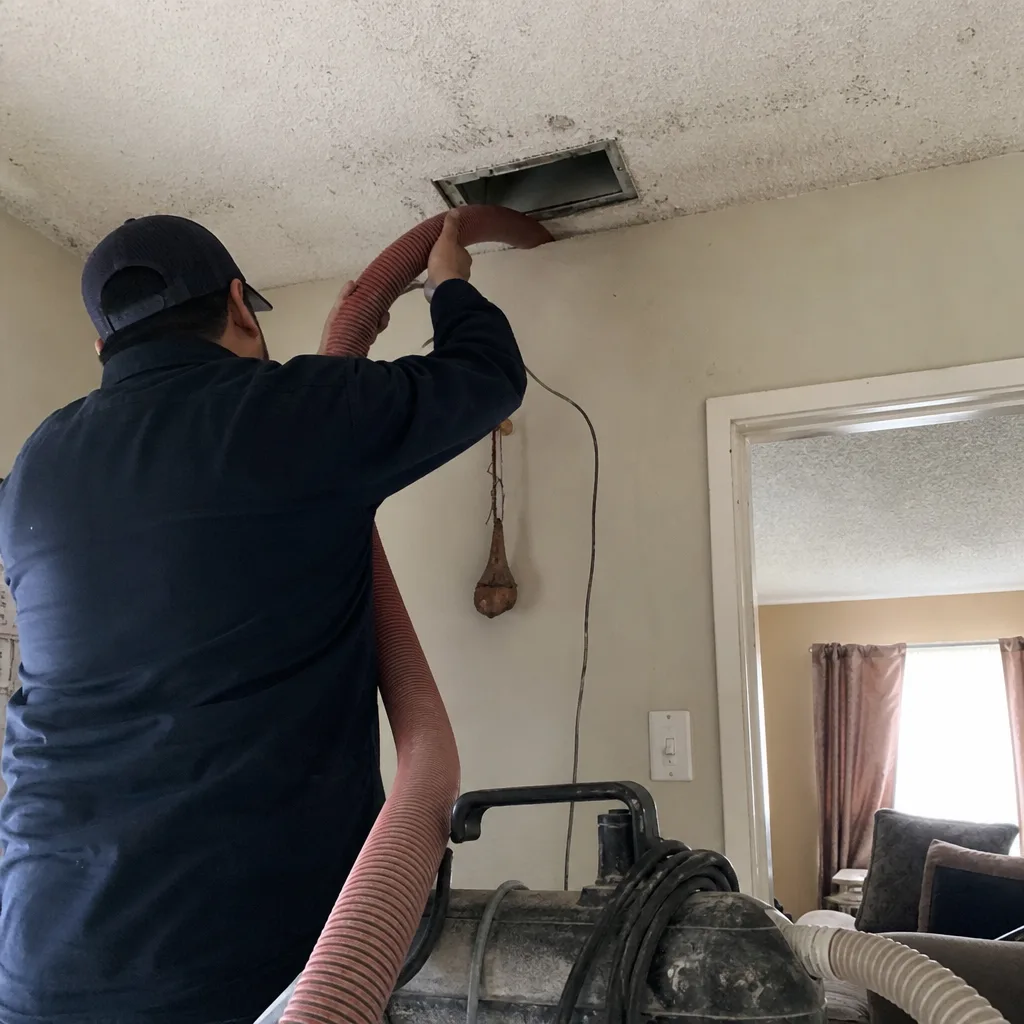 Before
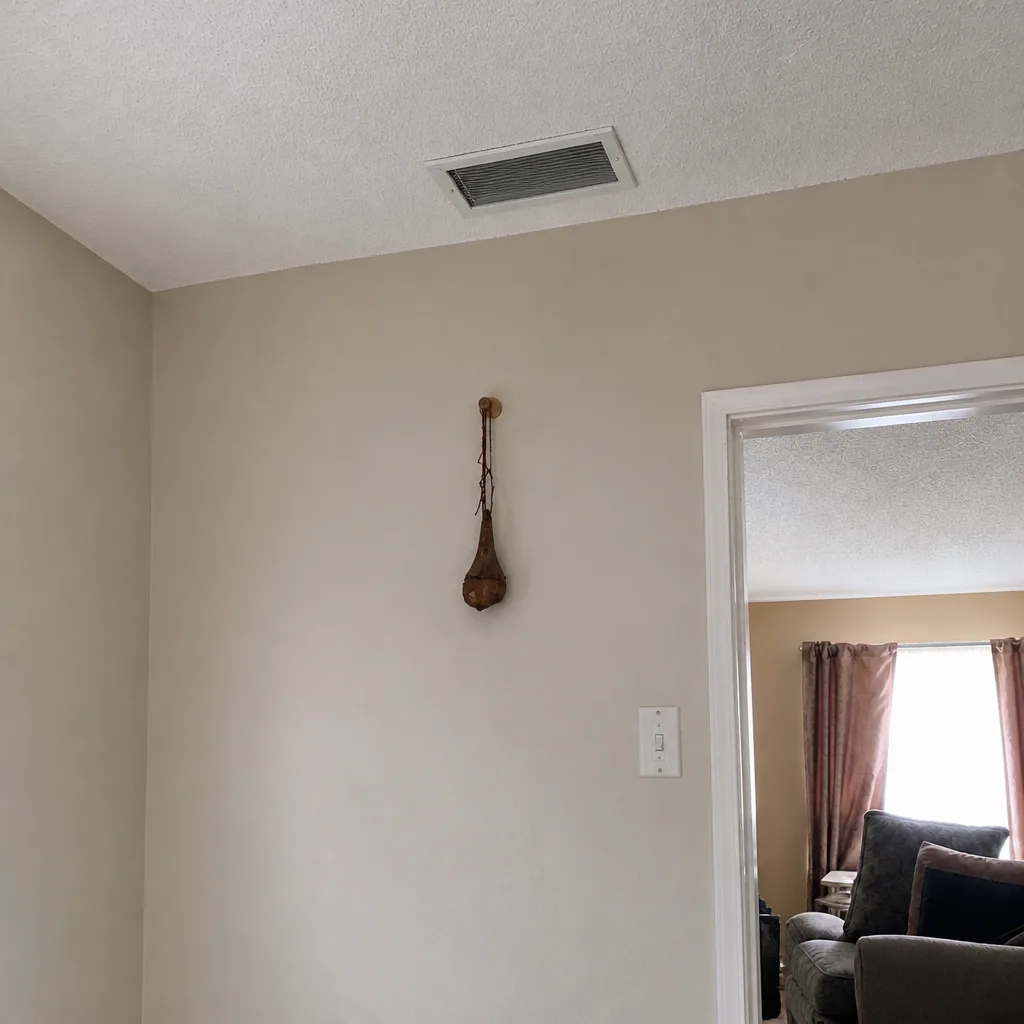 After
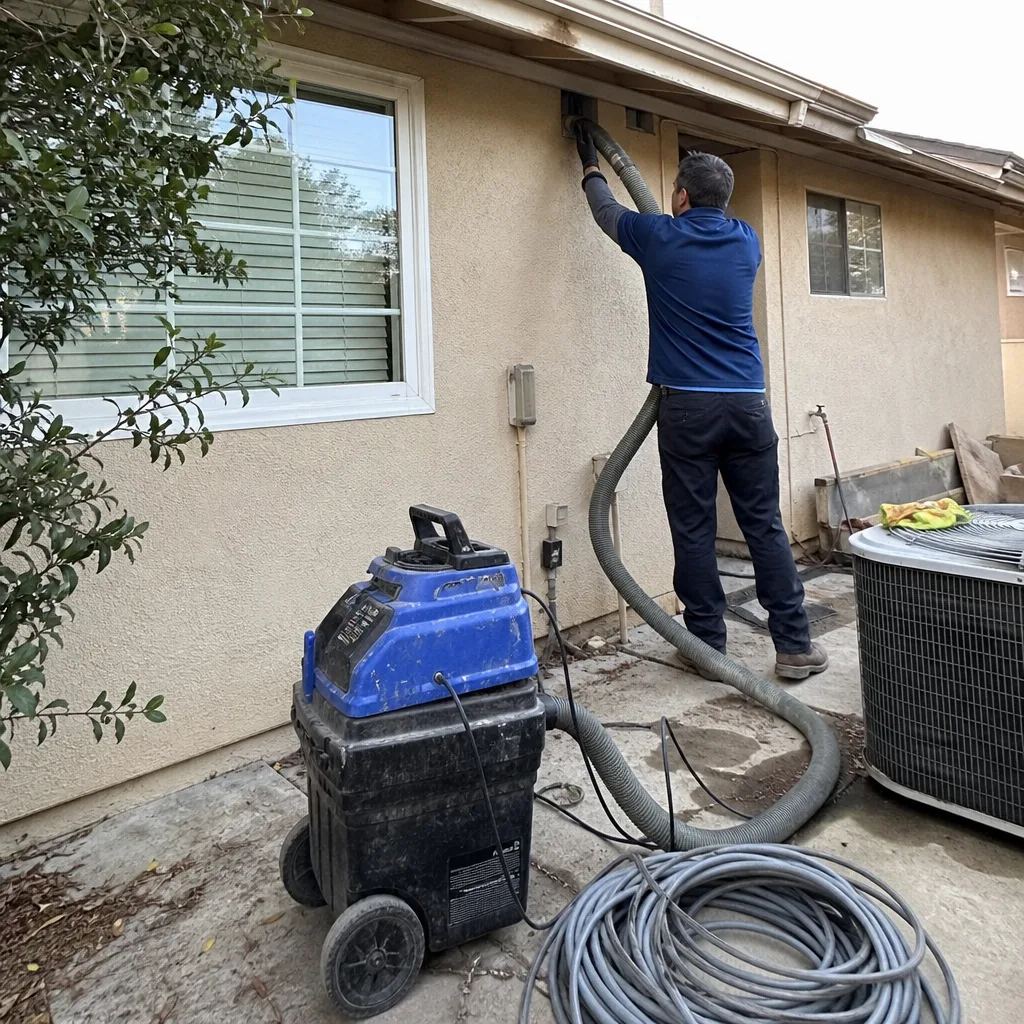 Before
 After
 Before
 After