
Last updated November 4, 2026
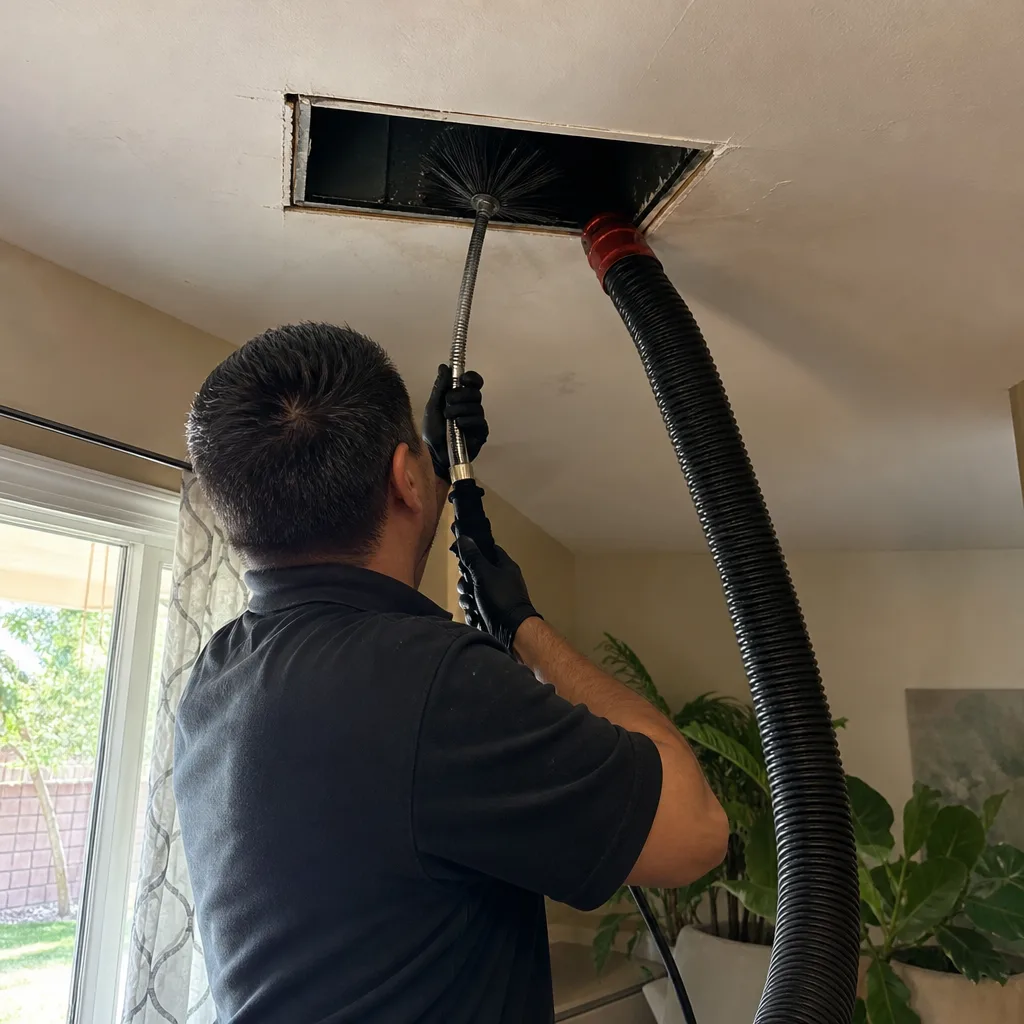
 Whole-home duct cleaning
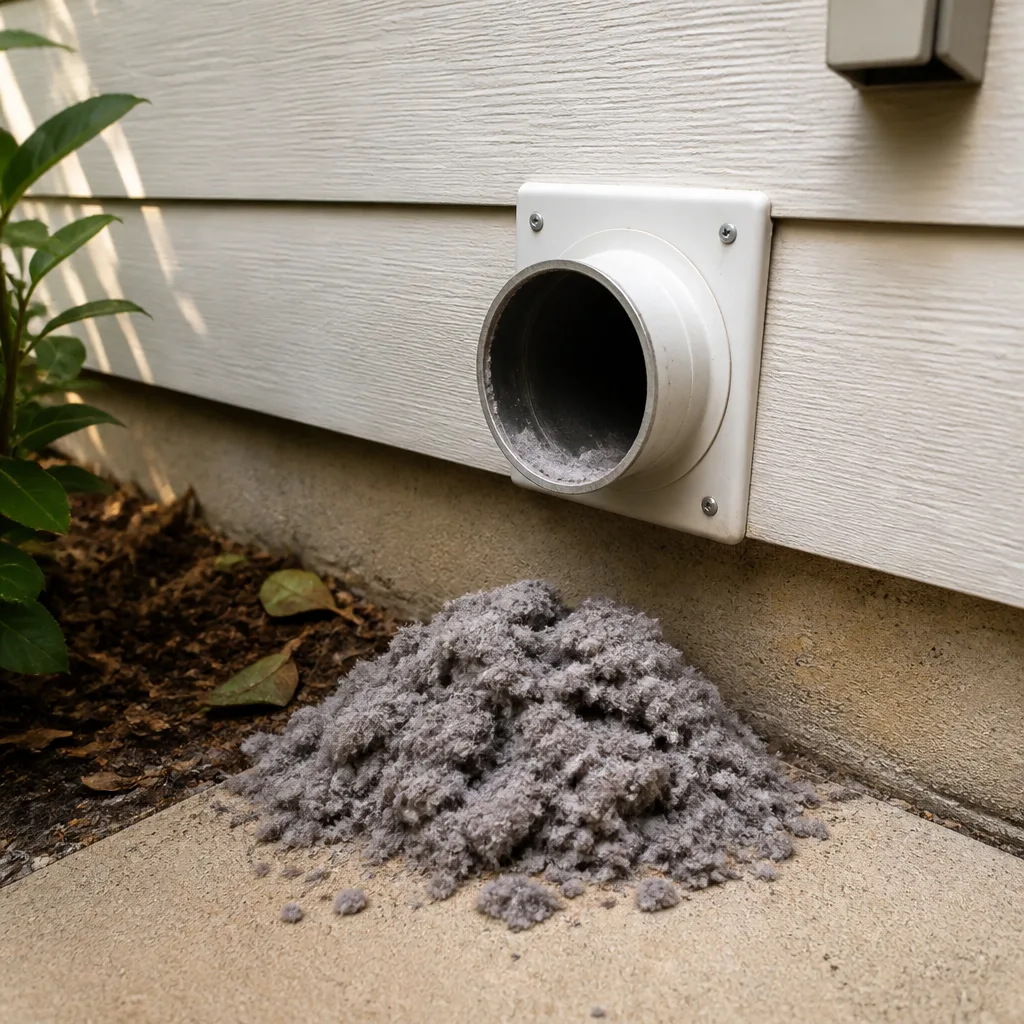 Dryer vent cleaning
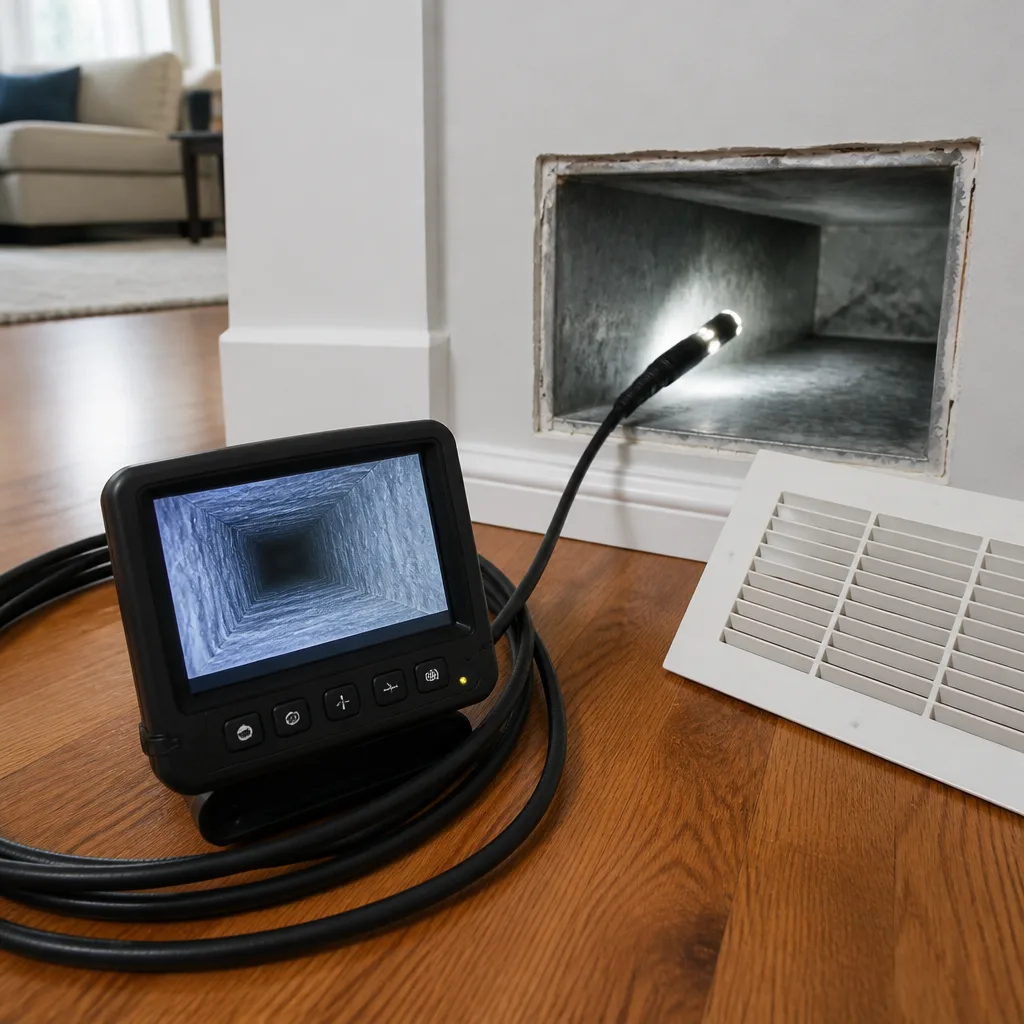 Camera inspection
 Sanitizing & deodorizing
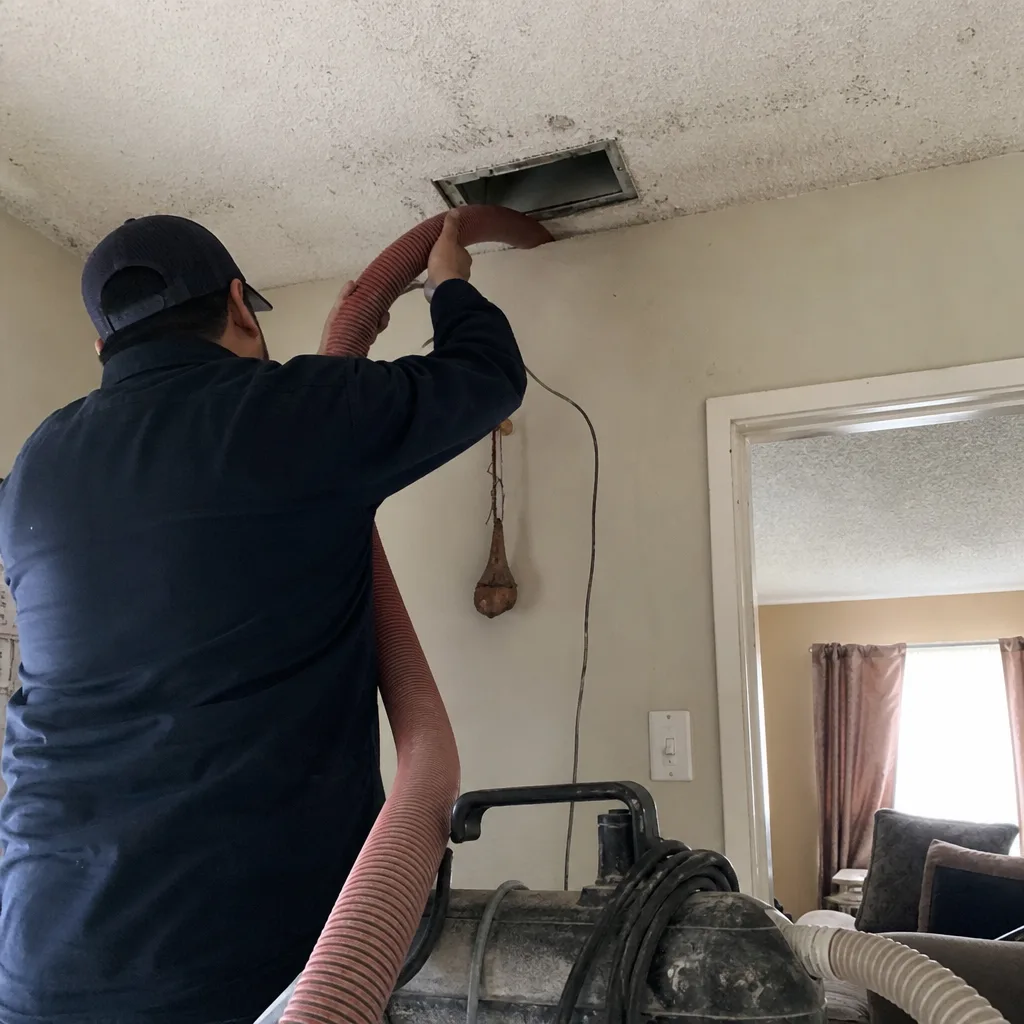
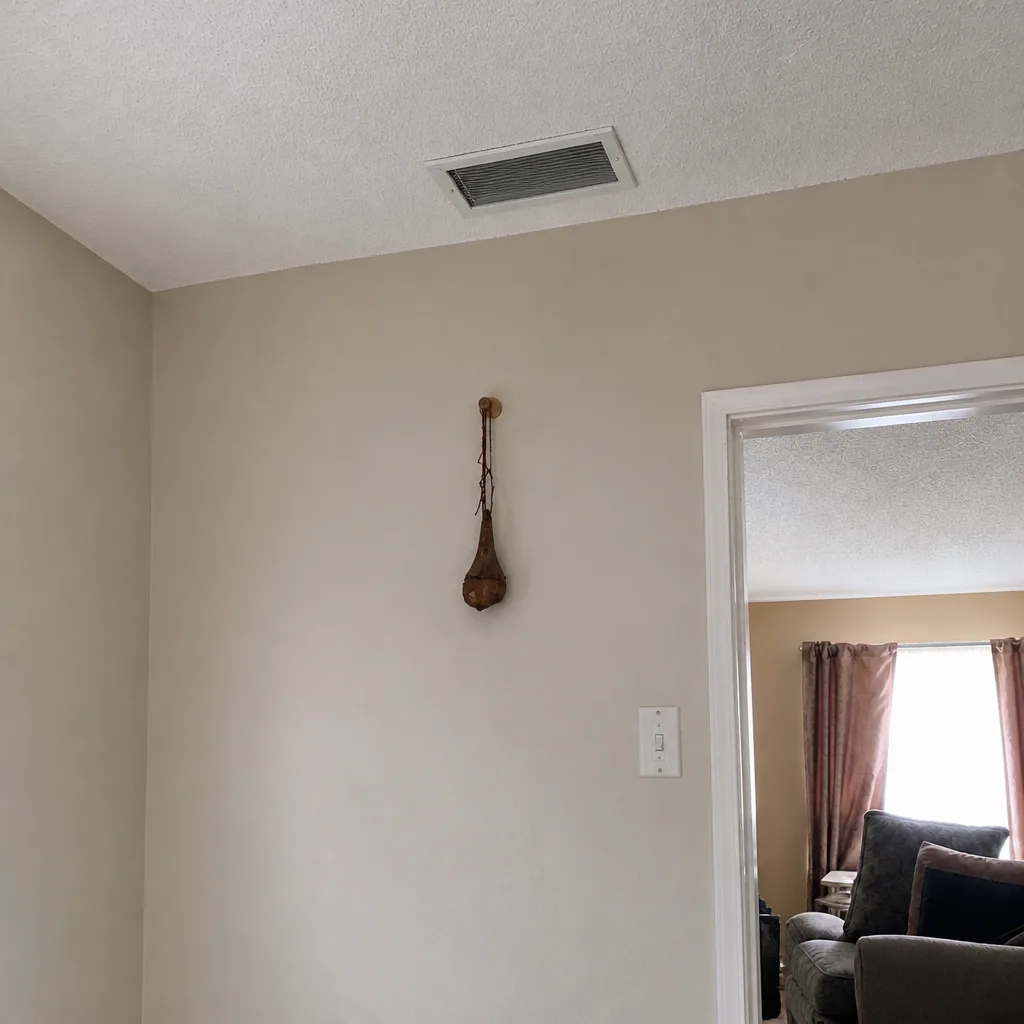
Whole-system duct and dryer vent check with before-and-after photos - you see exactly what came out of your vents
That "$99 whole-house special" is a bait ad - the real number appears once they are in your hallway, or the "clean" is a shop-vac at the register. We photograph the inside of your ducts before and after instead.
Air Duct Cleaning Maintenance Checklist for Simi Valley Homeowners
Most homeowners treat duct cleaning as a reaction to a problem: someone sneezes, a smell appears, or a renovation throws dust everywhere. But by the time you notice any of those signs, the system has usually been circulating that material through your furnace, your coil, and every room in the house for months. A maintenance checklist for Simi Valley ductwork flips that order. It’s not a schedule for when to scrub metal. It’s a structured inspection protocol that catches mechanical failure and air-quality problems hiding between cleanings, before they turn into a coil replacement or a mold remediation job. This guide gives you the monthly, seasonal, and annual checks that matter, which ones you can do yourself, and which ones genuinely require a camera and a technician.
Styles & brands we work with
- Whole-home duct cleaning
- Dryer vent cleaning
- Camera inspection
- Sanitizing & deodorizing
Quick Answer
Air duct maintenance in Simi Valley means checking your filter monthly (more often during fire season or Santa Ana wind events), inspecting supply and return registers quarterly for debris and discoloration, doing a full visual walk-through of exposed ductwork every six months, and scheduling a professional camera inspection and cleaning every one to three years depending on household conditions. Homeowners can handle the first three. The last one needs professional-grade negative-air equipment and a borescope, not a shop vac.
Table of Contents
- Monthly and Fire-Season Checks
- Semi-Annual Deep Inspection Protocol
- Annual Duct System Checklist
- DIY Checks vs. What a Technician Sees
- Simi Valley-Specific Conditions: Santa Anas and Smoke
- Setting Up a Tracking System by HVAC Brand
- Common Mistakes to Avoid
- When to Call a Professional
- Frequently Asked Questions
Monthly and Fire-Season Checks
Filter changes alone don’t protect your ductwork. In high-particulate conditions like Simi Valley’s fire-season air quality events, a standard one-inch filter can load with ash and fine particulate in under three weeks. Once a filter is clogged, two things happen. First, the system’s static pressure rises, which forces the blower to work harder and pulls unfiltered air through any gap in the filter rack or return plenum. Second, bypass debris that makes it past a clogged filter doesn’t come back out on its own. It deposits on the blower wheel, the evaporator coil, and the first few feet of supply duct, where it stays until someone physically removes it.
Here’s the monthly protocol, in order:
- Check the filter. Pull it out, hold it up to a light. If you can’t see the outline of the bulb filament through the media, it’s loaded. Swap it. During heavy Santa Ana wind events or nearby wildfire smoke, check it weekly, not monthly.
- Eyeball the return grilles. Look at the louvers. A gray film forming around the edges of the return means the filter isn’t catching everything it should, or the filter rack has a bypass gap. Wipe the grille with a damp cloth, but don’t reach tools into the duct.
- Listen to the blower. A change in sound, especially a rhythmic thumping or a higher-pitched whine, often points to a blower wheel with debris buildup on the fins. That’s a mechanical warning flag, not just an annoyance.
- Check supply register airflow. Walk the house and feel each supply register. If one room’s airflow has dropped noticeably, you could have a disconnected or crushed flex duct, not a dirty system.
Every one of these is a visual or auditory check that takes under five minutes. The value is noticing a trend before it becomes a repair. A filter that loads in two weeks instead of two months is data: it tells you when your ductwork is already carrying more particulate than it should, and it tells you when to move up your next professional air duct cleaning.
Semi-Annual Deep Inspection Protocol
Twice a year, at the spring and fall transitions, do a full walk-through. This is the layer where most homeowners stop paying attention, because nothing looks broken. But a semi-annual inspection of the visible parts of the system is exactly what catches the slow failures: the flex duct that’s started to sag, the register that’s developed condensation staining, the return cavity that smells musty after a humid stretch. We’ll cover the visual points below, and the specifics of what to look for at each.
Supply and Return Register Inspection
Registers are the only window you have into the duct run behind the wall or ceiling. A proper inspection looks at three things: debris accumulation, discoloration, and mold indicators. Debris accumulation means visible dust or lint clinging to the register blades even after a recent cleaning, which says the air moving through the duct is still carrying particles. Discoloration is more useful. Dark streaking at the edges of a supply register often traces to airflow turbulence depositing fine particulate there; broad gray or black patches across the whole face can indicate a return pulling from a damp crawlspace or a supply branch with standing moisture inside. Mold indicators are the most specific: black, green, or white patches that sit in a fuzzy or powdery pattern, not in neat parallel streaks. Streaks are airflow. Patches are biology. If you see the patches, don’t wipe and forget. That’s the signal to get a camera inside.
Visible Flex Duct Sag
If you have an attic or a crawlspace with exposed duct runs, do a quick visual pass with a flashlight. What you’re looking for is sag. Flex duct should run with a gentle curve, supported every four to five feet. When it sags more than a couple of inches between supports, it creates a natural low point that collects dust and becomes a condensation site. In Simi Valley’s dry climate, condensation is less of an everyday issue than it is in a coastal city, but the dust collection accumulates regardless. Sag also constricts airflow, which raises static pressure and pushes the system toward blower strain. Straightening supports is a handyman-level fix. Reconnecting a pulled-apart duct joint, on the other hand, needs tape and mastic that will actually hold, and that’s where a repair-trained technician earns the call.
Annual Duct System Checklist
The annual pass is the most thorough, and it’s the one where professional tools earn their cost. Once a year, we recommend a full system review in this order:
- Filter rack and bypass inspection. Even a good filter does nothing if the rack doesn’t seal. Check for gaps around the filter frame, collapsed internal supports, or a missing gasket on the access door.
- Blower wheel inspection. A borescope or inspection mirror shows whether the blower fins are clean or caked. A coated blower wheel can lose enough effective airflow to raise energy use and shorten motor life.
- Evaporator coil check. The coil sits downstream of the filter but upstream of the supply ducts. If the coil is dirty, every supply register in the house gets air that has passed over a damp, fouled surface. Cleaning a coil properly often means removing access panels and using a dedicated coil-cleaning approach, not just spraying it from the outside.
- Supply plenum and branch visual. The first few feet of the supply plenum collect the most airborne debris because that’s where turbulence is highest. Look for dust accumulation, debris that has settled on flat surfaces inside, or visible staining.
- Return-side leakage test. If the return plenum pulls air from an attic or crawlspace through even a small gap, that unfiltered air gets distributed through the entire house. We check for disconnected joints, loose boots, and torn flex outer jackets.
- Dryer vent run review. This is technically separate from the HVAC ducts, but the dryer vent carries lint through its own run, and it’s the highest-fire-risk duct in most homes. A visual check of the termination point, plus an airflow check, should be part of every annual walk-through. Our dryer vent cleaning service covers the full run, but a homeowner can at least verify the exterior damper opens when the dryer runs.
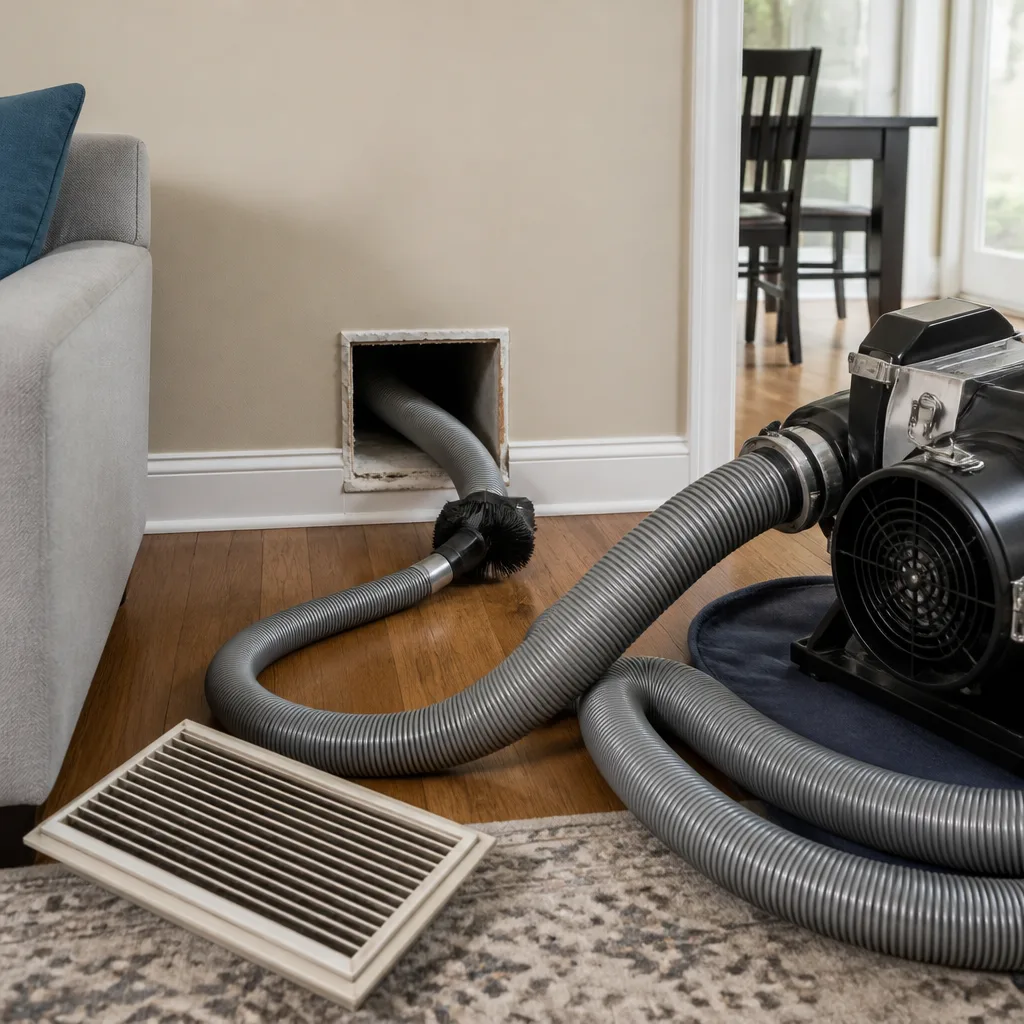
We don’t recommend that homeowners open any panel that requires a screwdriver on a furnace or air handler. The annual inspection is where a trained eye and a camera make the difference between guessing and knowing. We use Rotobrush and Nikro systems for cleaning, but those are extraction tools, not inspection tools. The inspection happens first with a camera, and the cleaning follows what the camera shows.
DIY Checks vs. What a Technician Sees
There’s a clean line here, and it’s worth drawing explicitly. Homeowners can legitimately check register grilles, filter condition, visible flex duct sag, and airflow at each supply. That’s a real maintenance protocol, not busywork, and doing it monthly and quarterly genuinely catches problems earlier. But the inside of a duct system is not something you can assess through a register. You’re seeing the last twelve inches of a run that may be forty feet long. The coil, the plenum, the blower, and the branch connections are all out of sight. A technician with a borescope sees what you can’t, and a cleaning company with Abatement Technologies equipment on hand can handle what a camera finds when it’s more than routine dust.
The distinction matters because of what each check costs in time and attention. A filter check costs two minutes. A semi-annual register walk costs fifteen. An annual professional camera pass costs an hour on site, and it’s the only step that gives you a verified condition report. This straightforward division of responsibility tends to make homeowners more consistent, not less, because the system is actually manageable.
We work with the equipment already in your home. If you have an Aprilaire media cabinet or whole-home filtration system, the filter schedule and the duct inspection schedule should align with that system’s service intervals. The point is not to replace these filters blindly. It’s to build the duct inspection around the equipment that’s actually installed, not a generic calendar.
Simi Valley-Specific Conditions: Santa Anas and Smoke
Simi Valley sits in a wind corridor, and the dry Santa Ana events that sweep through the valley do more than rattle patio furniture. They push fine dust, pollen, and whatever’s airborne into every exterior crack and gap in a house. If your return plenum has any leakage in an attic or crawlspace, a Santa Ana event will force particulate into the duct system through those gaps at a rate that normal filtering can’t keep up with. This is a Simi Valley-specific problem in both timing and severity. It’s not a coastal salt-air issue, and it’s not a freeze-thaw problem. It’s wind-driven fine particulate loading.
Wildfire smoke is the second, more aggressive local condition. When smoke advisories are active, the air outside carries combustion particulate: carbon, ash, and fine soot that behaves differently from household dust. It’s finer, it’s stickier, and it penetrates standard fiberglass filters. If a home in Simi Valley runs its HVAC system during a smoke event with a marginal filter or a leaky return, the soot doesn’t just pass through the house once. It deposits inside the ductwork, and every subsequent system cycle recirculates the residue. This is the mechanism that turns a smoke event into a persistent smell and a lasting IAQ problem.
The post-Santa Ana and post-smoke protocol should be:
- Check the filter immediately after the event. If it’s loaded, replace it the same day.
- Inspect all return grilles. Look for a fine gray or brown film that wasn’t there before.
- Smell the supply air when the system starts. A persistent acrid or smoky odor that survives for more than a day or two after the outside air clears means residue is inside the system.
- Schedule a camera inspection if any of the above are present. Don’t wait for the next annual check. Combustion particulate in a duct system is a contaminant, not a routine dust layer.
Simi Valley’s normal climate is dry and temperate, which means mold inside ducts is less of a constant threat than it is in humid regions. But a home with a humidifier running full-time, a crawlspace with a standing water issue, or a history of condensation on registers can create the right microclimate inside the ductwork. That’s when a visual inspection for mold indicators becomes essential, and when abatement-grade tools belong in the conversation. If contamination is the concern, we have the abatement-grade tools to address it properly.
Setting Up a Tracking System by HVAC Brand
No two HVAC systems age the same way, and the maintenance schedule should follow the equipment, not just the calendar. Lennox, Carrier, and Trane systems are common in Simi Valley, and each has manufacturer-specified service intervals for the furnace, coil, and filter cabinet. Your duct inspection schedule should key off those intervals, because the duct system is downstream of every component the manufacturer specifies.
A simple tracking system works like this:
- Lennox systems: If the filter cabinet specifies a six-month media replacement, schedule the semi-annual register walk for the same month. If the system has an iComfort or similar communicating thermostat that logs filter run hours, use that runtime data instead of calendar months to decide when to check the filter.
- Carrier systems: Many Carrier installations use a media cabinet with a four-inch filter rated for six to twelve months under normal conditions. In Simi Valley, with Santa Ana loading, treat the low end of that range as the real replacement interval, and schedule the duct inspection at the same time.
- Trane systems: Trane’s CleanEffects and similar electronic filtration systems don’t work the same way as a media filter. The collection cells need washing, and the pre-filter needs replacing. If the collection cell isn’t maintained, a Trane system can actually lose effectiveness and pass more particulate into the ductwork. Tie your duct check to the cell-cleaning schedule.
If your home has a whole-home filtration unit from Honeywell or Aprilaire, the same logic applies. A Honeywell media cabinet with a four-inch filter has a rated service life that assumes normal particulate loading. Simi Valley’s wind events shorten that. Half the homes we see with dirty coils and loaded plenums had a filter in place that was technically within its rated life, but the actual loading conditions said otherwise. The rating assumes average air. Your house, in this valley, may not have average air.
The simplest tracking system is a note on your phone or a line in a maintenance log: filter changed on this date, next check on that date, annual duct inspection in the same month as the furnace service. It doesn’t need to be elaborate. It needs to be consistent, and it needs to be tied to the equipment manufacturer’s schedule. That’s the system, not the filter, that keeps your ductwork clean over the long term.
Common Mistakes to Avoid
- Treating every filter as equal. A one-inch fiberglass filter in a media cabinet designed for four inches leaves a bypass gap, and a clogged cheap filter does more harm than a clean one because it forces bypass flow. Match the filter to the cabinet, not to whatever’s on sale.
- Ignoring the return side entirely. Most homeowners only look at supply registers, because that’s where air comes out. But return air is what feeds the system, and a leaky return in a Simi Valley attic pulls in hot, dusty air that was never meant to enter the ducts.
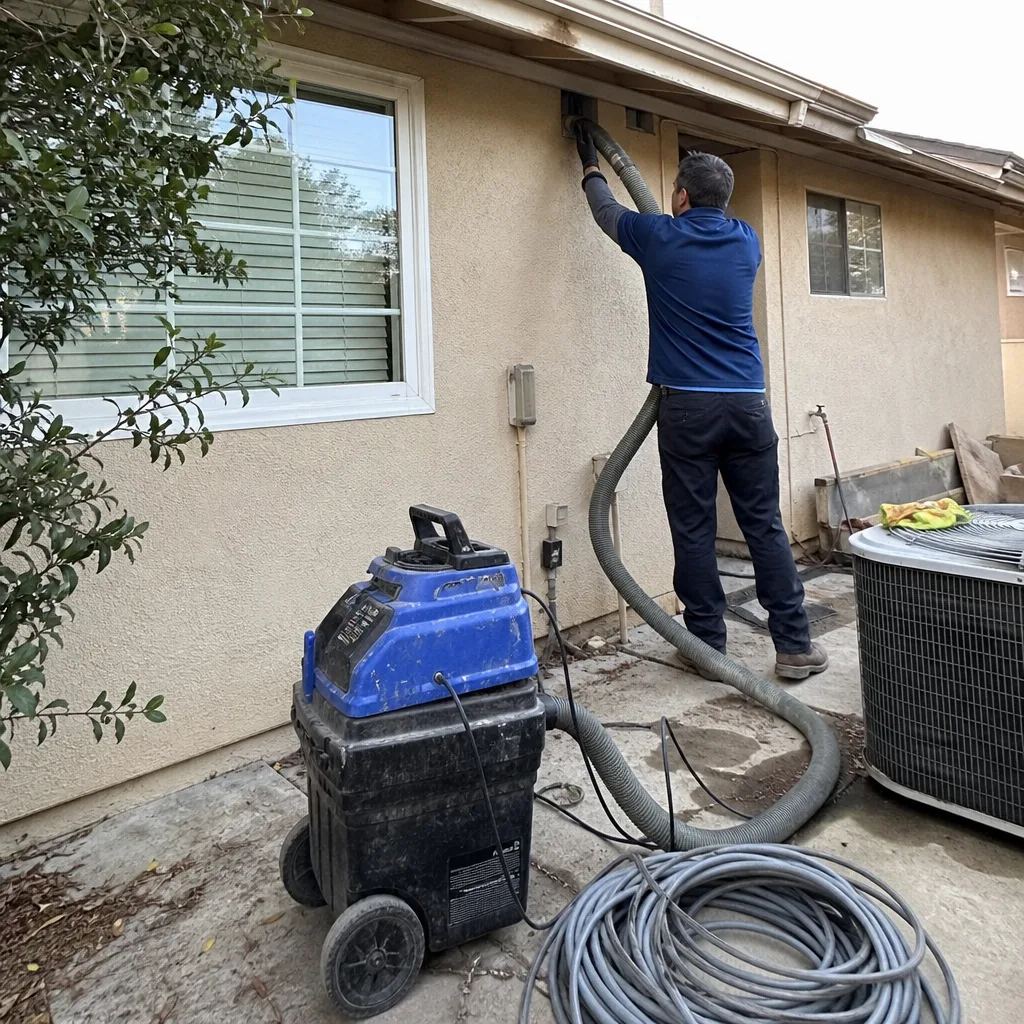
- Using a shop vac to clean ducts from the register. A shop vac reaches a foot into the duct, stirs up the rest, and gives a false sense of clean. Debris is only physically removed when a rotary-brush-and-vacuum system pulls it out under negative pressure, not when a homeowner waves a hose around at the opening.
- Waiting for a smell. Odor is a late-stage symptom. By the time a system smells musty or smoky, the source has usually been present for months. The checklist works because it catches conditions before they become objections.
- Assuming new construction means clean ducts. Renovation and new construction in Simi Valley leave drywall dust, sawdust, and construction debris inside ducts that were open during the build. A new home’s ducts are often dirtier in their first year than a ten-year-old system in a settled house.
- Hiring the lowest quote without understanding the method. A duct cleaning that relies on compressed air and a blower door re-distributes debris within the system rather than extracting it. We use rotary-brush extraction, not just air pressure, so debris is physically removed, not redistributed.
- Ignoring dryer vents as a separate failure point. A lint-clogged dryer vent is a fire hazard that no amount of HVAC duct cleaning addresses. It’s a different run, a different tool, and a different inspection point. The annual walk-through should cover both.
When to Call a Professional
Some conditions on this checklist point to a legitimate repair, not a routine cleaning. If you find a disconnected duct joint in the attic, a supply register with zero airflow, visible mold growth inside a register or return, or a persistent smoke odor that won’t clear after a fire event, call a technician rather than attempting a DIY fix. Disconnected ductwork requires sealing that will hold under system pressure, and mold means you need an inspection that can tell you whether the contamination is surface-level or deeper into the duct lining. Our technicians can repair damaged ductwork on the spot, not just document it. Duct Cleaning Simi Valley offers free estimates in Simi Valley, and you can reach us at (855) 353-2270. We answer 24/7. Fast dispatch from 7am to 7pm, Sunday through Friday.
Frequently Asked Questions
Most homes in Simi Valley benefit from a professional cleaning every one to three years, depending on household conditions. Homes with pets, a history of renovation dust, or Santa Ana smoke exposure lean toward the one-to-two-year end of that range. Homes with tight return systems, no pets, and a consistent filter routine may go three years. The camera inspection tells you more than a calendar can.
A proper maintenance checklist catches three categories of problems: filter failure, mechanical issues like sagging or disconnected duct, and contamination indicators like debris films or mold patches at registers. Each of these has a different fix. The checklist’s value is separating them, not just scheduling a cleaning.
No, not in any meaningful way. A household vacuum, even a strong one, reaches only the last few inches of the duct and cannot extract debris from the coil, plenum, or branch runs. Professional equipment uses a rotary brush and a negative-air vacuum that physically removes debris while the system is under controlled pressure. Trying to do it yourself usually stirs up more particulate than it removes.
Santa Ana winds carry fine wind-driven particulate that loads filters far faster than normal household dust. If your return system has any bypass leakage, that particulate is drawn into the ductwork at a rate the filter can’t stop, and it ends up deposited inside the supply runs. This is a Simi Valley-specific loading condition, and it’s the reason filter checks need to happen more often during the wind season.
Less common than in humid coastal areas, but not rare. Simi Valley’s dry climate keeps most ducts clean of standing moisture, but homes with humidifiers, crawlspace moisture issues, or long-standing condensation on registers can create the right conditions. Any black, green, or white patchy growth at a register or inside a visible duct run should trigger a camera inspection, not a wait-and-see approach.
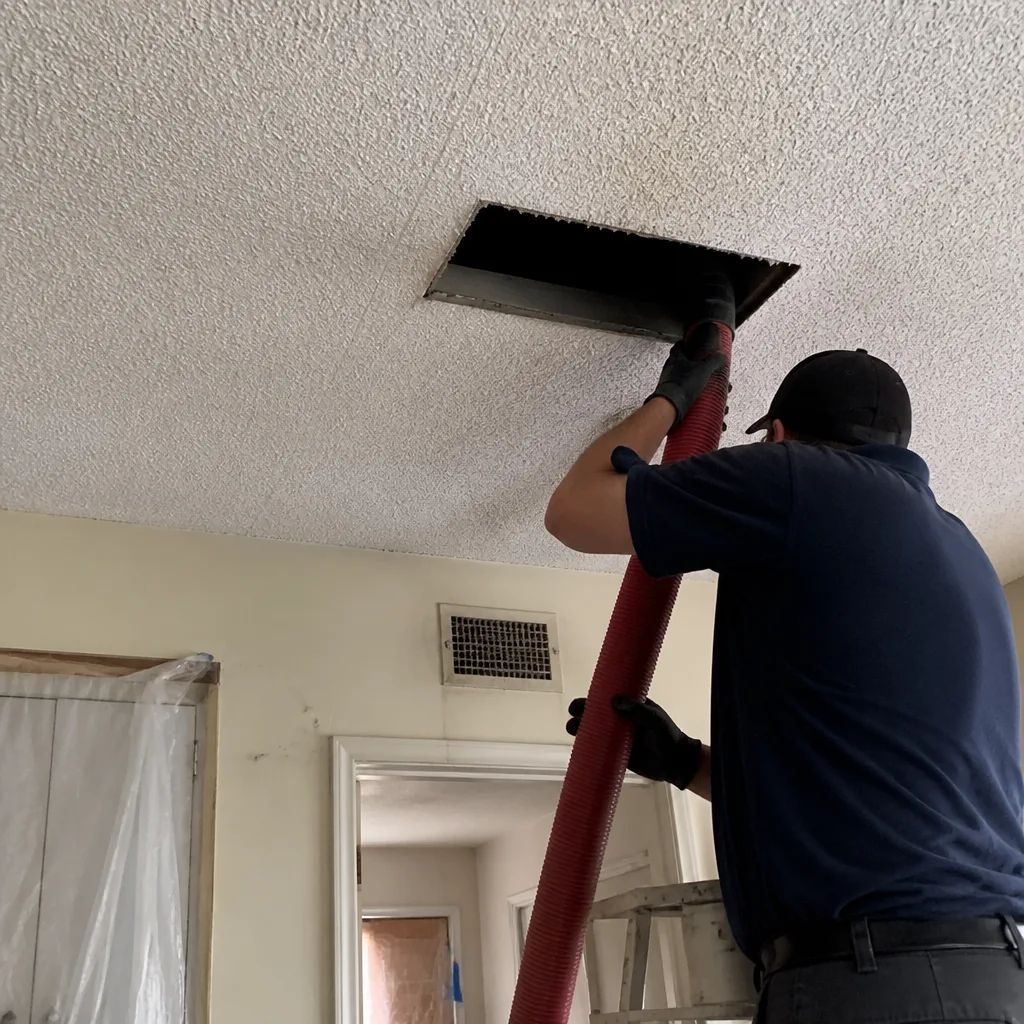
A proper duct cleaning includes before-and-after photos or video of the inside of the plenum and branch runs. You should be able to see the difference, and the technician should be able to show you. We use Rotobrush and Nikro systems for cleaning, and the extraction is physical: a brush agitates debris while a vacuum pulls it out. Ask any contractor whether their process includes camera verification. If it doesn’t, you’re trusting a process you can’t see.
It can, but only if it’s done after the smoke event and after the filter is replaced. Cleaning removes the fine soot and ash that deposited inside the ductwork during a smoke event. If you clean while the outside air is still smoky, the system will simply re-load. And if the source of the smoke odor is a leaky return pulling from a smoke-laden attic, the leak has to be sealed first. A cleaning without leak repair is a temporary fix.
Cleaning removes what’s inside the ducts. Repair fixes the ducts themselves: disconnected joints, crushed flex, sagging runs, torn outer jackets, and leaking boots. Most Duct Cleaning Simi Valley competitors offer only cleaning. We offer both, because a disconnected duct run that gets cleaned but not repaired will simply re-contaminate from the gap. Our technicians can repair damaged ductwork on the spot, not just document it.
The Bottom Line
A maintenance checklist for Simi Valley ductwork is not a substitute for professional cleaning. It’s the inspection layer that tells you when cleaning is actually needed, what kind of contamination you’re dealing with, and whether there’s a mechanical problem hiding behind the dust. The monthly filter check, the semi-annual register walk, and the annual camera inspection fit together into a system that catches problems early, and the Simi Valley-specific conditions, the Santa Anas and the smoke events, mean that diligence pays off faster here than in a quieter climate. If you find something that doesn’t look right, call (855) 353-2270 for a free estimate. We answer 24/7. Fast dispatch from 7am to 7pm, Sunday through Friday.
Written by the team at Duct Cleaning Simi Valley, serving Simi Valley since 2013.
See the difference
 Before
 After
 Before
 After
 Before
 After