
How to Choose the Right Air Duct Cleaning Company in Simi Valley
Choosing an air duct cleaning company in Simi Valley comes down to three things: verifying credentials, asking about equipment, and reading the scope of work before you sign anything. A legitimate company will happily show you certifications, explain their process in specific terms, and provide before-and-after photos. If a company dodges any of those, you have your answer. If you’d rather skip the research and talk to someone directly, call (855) 353-2270 for a free estimate.
Here’s the uncomfortable truth about this industry: California doesn’t require a specific license just for air duct cleaning. That means anyone with a van and a shop vac can print business cards and call themselves a duct cleaner. The burden of vetting falls entirely on you, the homeowner. Most guides tell you to check reviews and compare prices. Reviews are useful, but they don’t tell you whether the crew actually removed debris or just stirred it up. This guide focuses on what actually predicts service quality.
Start With Credentials, Not Star Ratings
Any company can paste a NADCA logo on their website. The actual certification requires verifiable technician IDs, and a legitimate company will hand those over without hesitation. Most homeowners in Simi Valley never ask. That’s a mistake, because the difference between a certified technician and someone who watched a few YouTube videos is exactly the difference between clean ducts and a dusty house two weeks later.
Here’s a ten-minute due diligence process that filters out most bad operators:
- Ask for the ASCS certification number. NADCA’s Air Systems Cleaning Specialist credential is tied to an individual, not a company. The technician who shows up should be the one holding it, and you can verify that number on NADCA’s public directory.
- Check the California contractor license. Many duct cleaning companies operate under a general home improvement or specialty contractor license. Ask for the number and check it against the Contractors State License Board website. Takes two minutes.
- Ask about liability insurance. If a company hesitates to name their insurer or coverage amount, move on. In our experience, the hesitation is the answer.
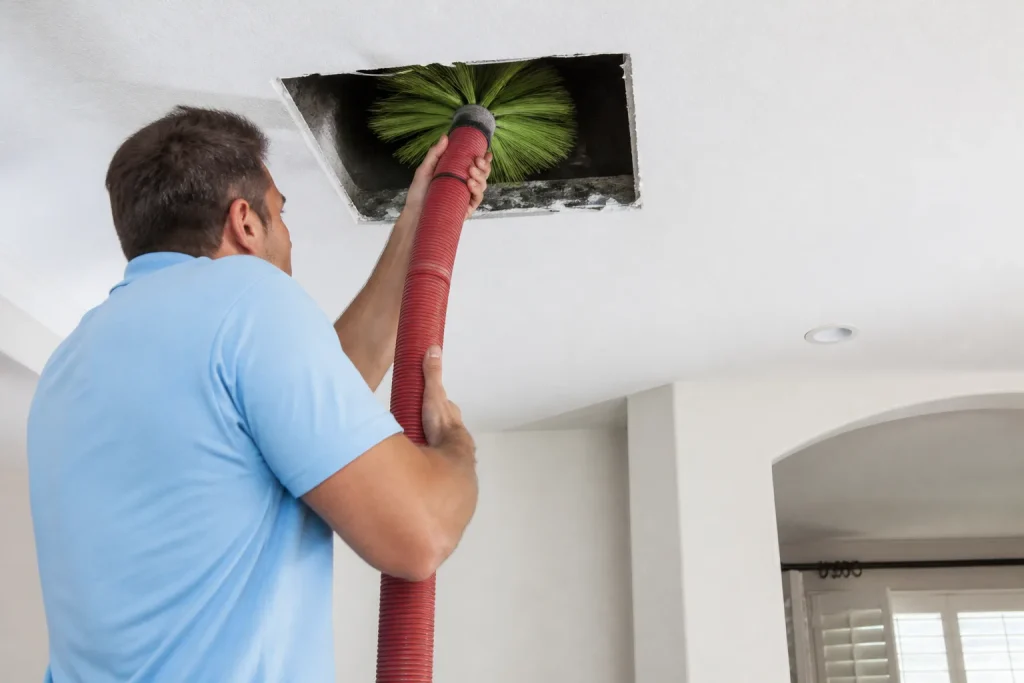
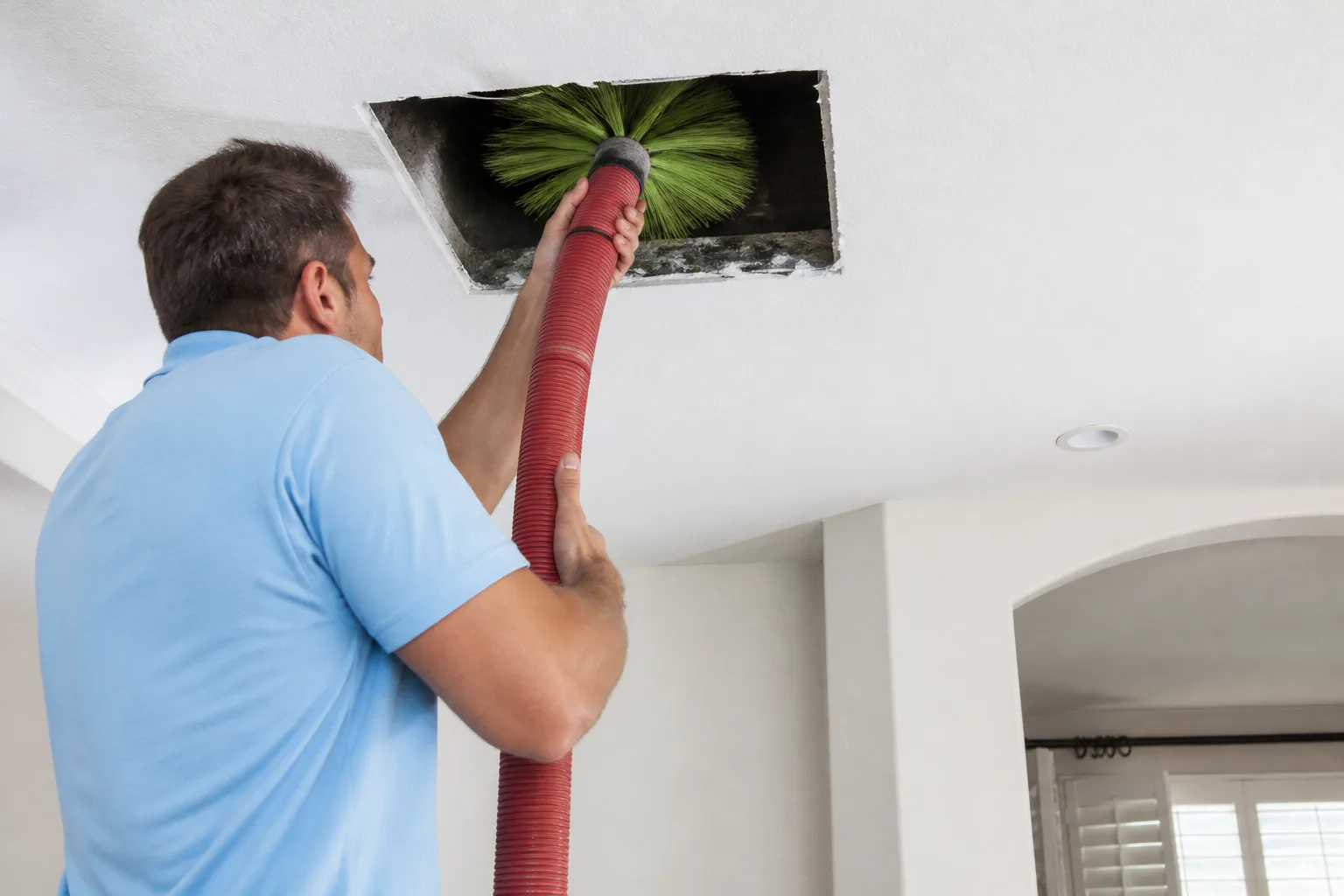
- Verify their equipment, not just their website. When they arrive, look at the truck. A professional rig uses a truck-mounted or large portable vacuum connected to a rotary brush system, not a glorified shop vac.
We’ve been doing air duct cleaning in Simi Valley long enough to know that the companies worth hiring are the ones that volunteer this information before you ask. Credentials aren’t a selling point for them; they’re just the baseline.
Ask the Equipment Questions Competitors Hope You Don’t
This is where the industry splits into two tiers. Most homeowners compare quotes without realizing they’re comparing completely different types of service. The equipment a company uses determines whether debris is physically removed or simply blown loose and left to resettle.
Here’s what to ask before booking:
- Truck-mounted or portable vacuum? Truck-mounted systems typically pull higher CFM (cubic feet per minute) than portable units. That CFM rating matters because it’s what creates the negative pressure that pulls loosened debris out of the system. More CFM means more extraction power. Portable units can work, but they should still be industrial-grade, not something you’d rent from a hardware store.
- Do you use contact cleaning tools or negative pressure alone? Negative pressure alone doesn’t clean ducts. It just pulls air through them. Real cleaning requires agitation, usually a rotary brush or compressed-air whip that physically contacts the duct walls and knocks debris loose before the vacuum extracts it. A company that only hooks up a vacuum and lets it run is doing half a job.
- What’s the CFM rating on your vacuum? A professional system should pull at least 2,000 CFM at the unit. If the tech can’t answer this immediately, they don’t know their own equipment, which tells you everything.
- Do you use Rotobrush or Nikro systems? These are the two rotary-brush-and-vacuum brands you’ll see specified in industry training materials. We run both, because different duct layouts respond better to different brush configurations. If a company names a specific system without prompting, they know what they’re doing.
A company that cleans ducts in Simi Valley properly is removing fine particulate that has settled in your system, often for years. That takes agitation plus extraction, not just airflow. When a quote seems too low, it’s usually because one of those two components is missing.
Read the Scope of Work Like a Contract, Because It Is
The language in a quote tells you exactly what kind of job you’re getting. Most bait-and-switch operations in this industry don’t happen through aggressive sales tactics. They happen through ambiguous scope descriptions that let a crew show up, clean the easy-to-reach main trunk, and leave the branch lines untouched.
Here’s what to look for:
- “We clean all supply registers, return registers, main trunk line, and branch ducts.” This is the language of a full-system clean. If the scope doesn’t explicitly list branch ducts, assume they’re not being touched.
- “Includes plenum cleaning and inspection.” The supply and return plenums are boxes connected to your furnace or air handler. They collect a disproportionate amount of debris. A scope that skips them is a scope that cuts corners.
- “Access holes cut and resealed.” Most systems require cutting access points to reach the full duct network. A professional quote specifies where access will be cut and how it will be resealed to maintain airflow and efficiency.
- “Furnace or air handler blower cleaning included.” The blower fan pushes air through your entire system. If it’s coated in dust, the ducts get recontaminated quickly. A thorough company includes this.
If the quote just says “duct cleaning” with no detail, ask for the scope in writing. A company that can’t articulate what they’re actually cleaning is a company that will deliver the minimum. This applies to every job in Simi Valley, from a small condo to a large two-story home.
Before-and-After Photos Are Non-Negotiable
Here’s a simple test that separates legitimate duct cleaners from everyone else: ask if they provide before-and-after photos of your actual ducts. A professional company says yes without hesitation. They already send cameras into the ducts as part of the job, so documenting the work costs them nothing.
We hear from homeowners in Simi Valley who paid for duct cleaning and have no idea what was actually done. They got an invoice and a vague verbal summary. That’s not acceptable. If you’re paying for the inside of your ductwork to be cleaned, you should be able to see it. Ask for photos of the supply and return plenums, the main trunk, and at least one branch line before the job starts and after it’s complete.
Video inspection access matters too. Some companies will show you the live camera feed from the duct inspection before and after. This isn’t a gimmick; it’s the most direct form of accountability the industry offers. When a company is willing to show you the inside of your ducts in real time, they have nothing to hide.
The same logic applies to repairs. If a technician tells you there’s a damaged duct or disconnected section, ask to see it on camera. Legitimate issues are visible on inspection footage. This is why Duct Cleaning Simi Valley includes camera inspection as a standard part of the job. You shouldn’t have to take anyone’s word for the condition of your own air system.
Red Flags That Mean You Should Stop the Job
Some warning signs only become visible once the crew arrives. If you see any of these, you’re within your rights to tell them to pack up and leave:
- No negative pressure equipment on the truck. If the crew arrives with a portable vacuum that looks like it belongs in a janitor’s closet, the job isn’t happening properly. Professional duct cleaning requires a high-powered vacuum creating negative pressure inside the duct system while agitation tools work the surfaces. No negative pressure means debris gets blown around, not extracted.
- The technician can’t explain their process in specifics. Ask them to walk you through what they’re about to do, step by step. A real technician can explain it clearly in thirty seconds. If they fumble, stall, or use vague language like “we’re going to clean it out real good,” that’s a red flag.
- Immediate discovery of ‘additional problems’ that double the quote. This is the classic bait-and-switch move. The crew starts, then suddenly finds mold, “severe contamination,” or a “broken component” that requires a much bigger job. Legitimate companies identify these things during the initial inspection, before you’ve agreed to work. Anything discovered mid-job should be shown to you on camera and quoted separately, with your approval before proceeding.
- The scope shrinks as the job progresses. If the quote says branch ducts are included but the technician tells you they “couldn’t reach” a section, that’s a failure of process, not an acceptable explanation. Professional equipment is designed to access the full system.
This is the moment to trust your instincts. If the situation doesn’t feel right, stop the work. A legitimate company would rather lose a job than operate without your confidence. The companies that pressure you to proceed are the ones that should leave.
Why Equipment-Serious Companies Handle Repairs, Not Just Cleaning
Here’s a distinction most homeowners never consider: when a duct cleaning company finds damaged, disconnected, or leaking ductwork, what happens next? A cleaning-only company documents the problem and hands you a referral to a second contractor. That means scheduling another visit, paying for another diagnostic, and coordinating between two companies. Or, as happens too often, the damage never gets fixed because the homeowner gets overwhelmed by the process.
A company with repair capability fixes the problem in the same visit. Damaged flex duct gets replaced. Leaking connections get sealed. Disconnected sections get reattached. The air system works properly before the crew leaves, not after a two-week back-and-forth with a different contractor. That’s what we mean when we say our technicians can repair damaged ductwork on the spot, not just document it.
This matters in Simi Valley, where homes built in different decades have wildly different duct systems. Older homes often have metal ductwork with failing tape seals at the joints. Newer homes frequently have flex duct that gets crushed or torn in the attic. A company that can only clean around these issues isn’t solving the problem that’s actually affecting your air quality.
What About Whole-Home Filtration and Humidity Control?
If you have a Honeywell or Aprilaire system, the company you hire should understand how these interact with duct cleanliness. Whole-home filtration captures airborne particles as air passes through. Humidity control manages moisture levels that affect dust mite populations and mold growth. But if the ducts feeding these systems are dirty, the equipment is fighting against contaminated air.
We work around Honeywell and Aprilaire systems regularly. A technician who knows these brands will clean the duct system without compromising the filtration equipment, and they’ll understand how the system should perform afterward. This isn’t a niche concern. A significant percentage of newer Simi Valley homes have some form of whole-home air quality equipment, and a cleaning company should treat that equipment as part of the job, not an obstacle to work around.
Dryer Vent Cleaning Belongs in the Same Conversation
Most residential house fires that start in the laundry area trace back to lint buildup in the dryer vent. That’s a fire-safety issue, not just an air quality issue. We bring this up because many homeowners treat dryer vent cleaning as an optional add-on when it’s actually the most urgent service on the menu.
Lint is highly flammable, and it accumulates in the vent line over years of use. The duct that carries hot, moisture-laden air from your dryer to the exterior of your home gets a coating of lint on the walls. Add heat, and you’ve got the conditions for a fire. A professional dryer vent cleaning removes that buildup, restoring proper airflow and reducing the fire risk.
If you’re already having your air ducts cleaned in Simi Valley, the dryer vent should be part of the conversation. It’s a separate system with a separate purpose, but it affects the same thing: the air in your home and the safety of your family.
The Bottom Line
Choosing a duct cleaning company in Simi Valley isn’t about finding the lowest quote or the best review score. It’s about finding a company that shows you their credentials, explains their equipment, provides a detailed scope of work, and documents the results. Ask the hard questions before booking. A legitimate company will welcome them.
We run Rotobrush and Nikro systems because rotary-brush-and-vacuum extraction is the standard for physically removing debris, not just redistributing it. We handle air duct repair in the same visit because finding a problem isn’t the same as fixing it. And we treat dryer vent cleaning as a fire-safety service, not an afterthought. If you’re ready to talk specifics, call (855) 353-2270 for a free estimate. We answer 24/7. Fast dispatch from 7am to 7pm, Sunday through Friday.
Frequently Asked Questions
Ask for the technician’s ASCS certification number, then search it on NADCA’s public verification directory. Certifications are issued to individuals, not companies, so the person who shows up should be the person listed. If a company can’t produce a verifiable number, they either don’t have certified technicians or they’re misrepresenting their credentials.
Truck-mounted vacuums pull significantly more CFM than portable units, which means stronger negative pressure and better debris extraction. Portable systems can work for smaller jobs if they’re industrial-grade, but they typically can’t match the extraction power of a truck-mounted rig. Ask for the CFM rating either way; a professional system should pull at least 2,000 CFM.
Because you’re paying for a job that happens inside your walls, where you can’t see it. Professional companies already run cameras into the ducts as part of the inspection process, so providing before-and-after photos costs nothing. If a company refuses or hedges, assume they have something to hide. Ask for photos of the plenums, main trunk, and at least one branch line.
The NADCA standard recommends cleaning every 3 to 5 years, but that timeline shifts based on your circumstances. Homes with pets, smokers, recent renovations, or allergy sufferers may need cleaning more frequently. If you’ve just moved in or completed construction, get an inspection even if it’s been less than three years since the last cleaning. Dust from drywall, flooring, and paint work settles directly into the duct system.
Written by the team at Duct Cleaning Simi Valley, serving Simi Valley since 2013.
Need Air Duct Cleaning Help?
Call Duct Cleaning Simi Valley - licensed & insured, here with fast help in Simi Valley.
(855) 353-2270